

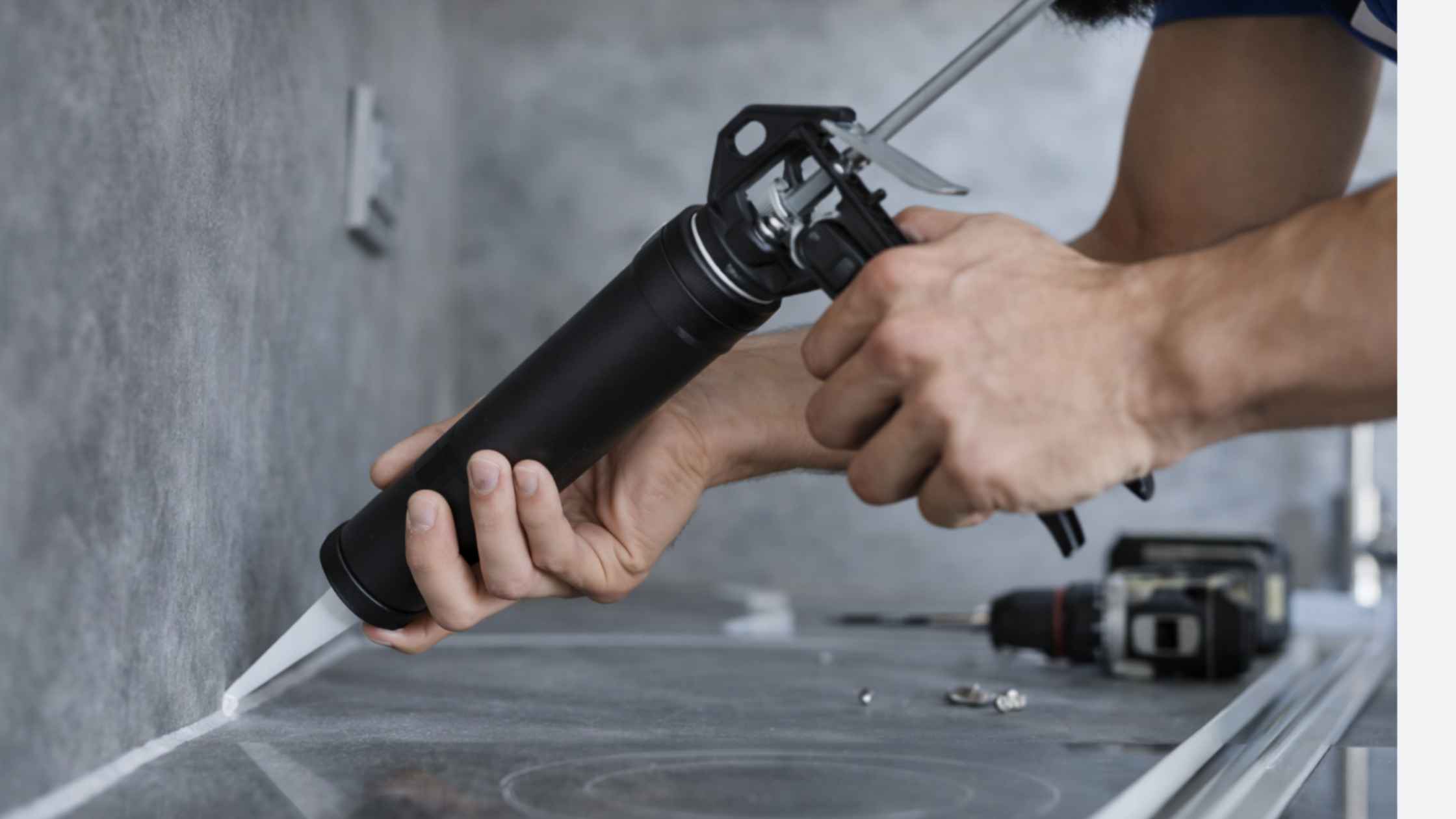
Even premium waterproof sealants fail with improper application. Many sealant failures trace back to application errors rather than product defects.
These mistakes are completely preventable with proper knowledge. A perfect product applied incorrectly delivers the same result as a poor product, such as failure, water infiltration, and wasted investment.
Understanding common application errors saves money, prevents water damage, and protects your reputation. This guide reveals 5 such critical mistakes and exactly how to avoid them.
Contents
- 1 Why Application Matters More Than Product Quality
- 2 Mistake #1: Inadequate Surface Preparation
- 3 Mistake #2: Wrong Product Selection
- 4 Mistake #3: Incorrect Mixing and Application Thickness
- 5 Mistake #4: Ignoring Weather Conditions
- 6 Mistake #5: Skipping or Rushing Cure Time
- 7 Sunanda Global’s Professional-Grade Waterproof Sealant Solutions
- 8 Making Your Decision with Sunanda Global
- 9 FAQs

Why Application Matters More Than Product Quality
The best waterproof sealants in the world fail if applied incorrectly. Surface preparation represents the majority of waterproofing success, yet it’s the most commonly skipped step.
Common consequences of application mistakes:
- Premature sealant failure within months instead of years
- Continued water infiltration despite treatment
- Damage to building structures and contents
- Reputation damage for contractors
- Legal liability for building owners
Prevention proves far cheaper than remediation. Let’s examine each critical mistake and its solution.
Mistake #1: Inadequate Surface Preparation
The Problem
Surface preparation determines whether the sealant bonds properly or fails prematurely. Yet contractors frequently rush or skip this crucial step entirely.
Common surface prep failures:
- Not cleaning dirt, dust, oil, grease, or loose particles
- Leaving laitance on new concrete
- Not repairing cracks and defects first
- Applying to wet surfaces when a dry substrate is required
Why it fails: The Sealant bonds to contaminants instead of the substrate. Poor adhesion leads to delamination. Moisture trapped under the coating causes blistering. Underlying cracks continue propagating, breaking the seal.
How to Prevent
- Ensure thorough surface preparation by cleaning all contaminants
- Repair cracks with appropriate mortar
- Verify substrate moisture levels
- Always follow the manufacturer’s specifications for substrate profiling and priming
Mistake #2: Wrong Product Selection
The Problem
Using unsuitable waterproof sealants for specific applications guarantees failure regardless of perfect application technique.
Common product selection errors:
- Using standard sealant where a chemical-resistant system is needed
- Applying a rigid product in high-movement joints
- Selecting the wrong sealant for the substrate material
- Choosing a single-component when a two-component is required
- Using interior product for exterior applications
How to Prevent
- Select the sealant by carefully matching it to the specific application requirement
- Always follow the manufacturer’s specifications
- Get professional advice for technical guidance
Mistake #3: Incorrect Mixing and Application Thickness
The Problem
Wrong mixing ratios or improper joint sizing compromise performance even with correct product and surface preparation.
Mixing errors with two-component systems:
- Not measuring components accurately
- Insufficient mixing time or improper mixing method
- Using contaminated containers
- Exceeding pot life before application
Joint design errors:
- Width-to-depth ratio incorrect
- Joint too shallow for movement
- Joint too deep, wasting material
- Missing bond breaker causing three-sided adhesion
How to Prevent
- Strictly follow the manufacturer’s mixing instructions
- Calculate joint width based on expected movement
- Use backer rod at the correct depth
- Ensure the joint allows the sealant to stretch without three-sided adhesion
Mistake #4: Ignoring Weather Conditions
The Problem
Environmental conditions during application and cure dramatically affect performance. Ignoring the weather guarantees problems.
Temperature and weather problems:
- If the temperature is too cold, it will result in poor adhesion
- If the temperature is too hot, rapid skinning prevents proper tooling, reduces working time, poor substrate wetting.
- If the sealant is applied just before the rain, it can wash away any uncured sealant and potentially damage the substrate.
- If the substrate is wet, there is poor adhesion for products that require dry surfaces.
How to Prevent
- Plan applications within the product’s specified temperature range
- Continuously monitor weather conditions
- Protect fresh applications from rain or extreme heat
- Prioritize substrate temperature over air temperature
Mistake #5: Skipping or Rushing Cure Time
The Problem
Rushing the cure compromises bond, performance, and durability. Yet project pressure often forces premature exposure.
Premature traffic or loading:
- Walking on fresh sealant damages the surface
- Equipment loads before cure cause deformation
- Prevents proper film formation
Water exposure too soon:
- Washes away partially cured material
- Prevents a complete cure reaction
- Creates surface defects and weakness
Not allowing proper depth cure:
- Surface cures, but interior remains soft
- Interior cure failure causes long-term problems
- Movement cracks incompletely cured sealant
How to Prevent
- Plan a realistic schedule
- Follow specifications strictly
- Physically protect the area
- Verify cure before use
Sunanda Global’s Professional-Grade Waterproof Sealant Solutions
SUNSEAL PU – Single-Component Polyurethane Joint Sealant
For Dynamic Joints and Quick Applications
A one-part system eliminates mixing errors. Moisture-cured, ready to use directly from the cartridge. Self-leveling formula bonds strongly to most building materials.
Applications: Dynamic cracks, expansion joints, window frames, roofing sheet joints, facade joints.
SUNSEAL PS – Two-Part Polysulphide Joint Sealant
For Extreme Movement and Harsh Conditions
Tackles dynamic structural cracks, expansion joints, and curtain wall glazing. Handles extreme building movement while staying flexible.
Applications: Structural expansion joints, underwater seals, chemical plant joints, high-movement applications.
SUNEPOXY PS – Epoxy Polysulphide Coating
For Chemical Resistance and Containment
Designed for water tanks, chemical storage, and food processing facilities. Safe for potable water contact. Resists acids, alkalis, and petroleum products.
Applications: Water tanks, sewage plants, chemical containment, food processing areas.
Making Your Decision with Sunanda Global
With over 45 years of expertise, Sunanda Global leads in innovation in construction chemical coatings. We invest 5% of annual revenue in R&D, focusing 60% of our efforts on LEED-compliant and eco-friendly products. As the best waterproofing company, our low-VOC, environmentally conscious solutions deliver top performance.
Our waterproof sealants, SUNSEAL PU, SUNSEAL PS, and SUNEPOXY PS, are engineered for demanding applications requiring reliable, long-term performance. With us, you can expect reliable on-site execution through trusted waterproofing contractors in Bangalore, Mumbai, Chennai, Delhi, and other major cities.
Contact Sunanda Global for expert guidance on selecting and applying the right waterproof sealants for your project.
FAQs
Q1 What’s the single most important factor for successful waterproof sealant application?
Surface preparation. Even a perfect product and application fail on poorly prepared substrates. A clean, sound, properly prepared surface is the foundation of success.
Q2. Can I speed up the cure time with heat or fans?
No. Forced drying often causes surface skinning while the interior remains uncured, leading to blistering and poor performance. Allow natural cure at temperatures within product specifications.
Q3. What should I do if rain threatens before cure is complete?
Cover with plastic sheeting or tarps, ensuring air circulation underneath. If water contacts uncured sealant, damage assessment may be needed, and it may require removing and reapplying the affected areas.
Q4. How do I know if I’ve selected the right waterproof sealant?
Match sealant properties to application requirements: joint movement (static vs. dynamic), substrate types, chemical exposure, temperature range, and UV exposure.