

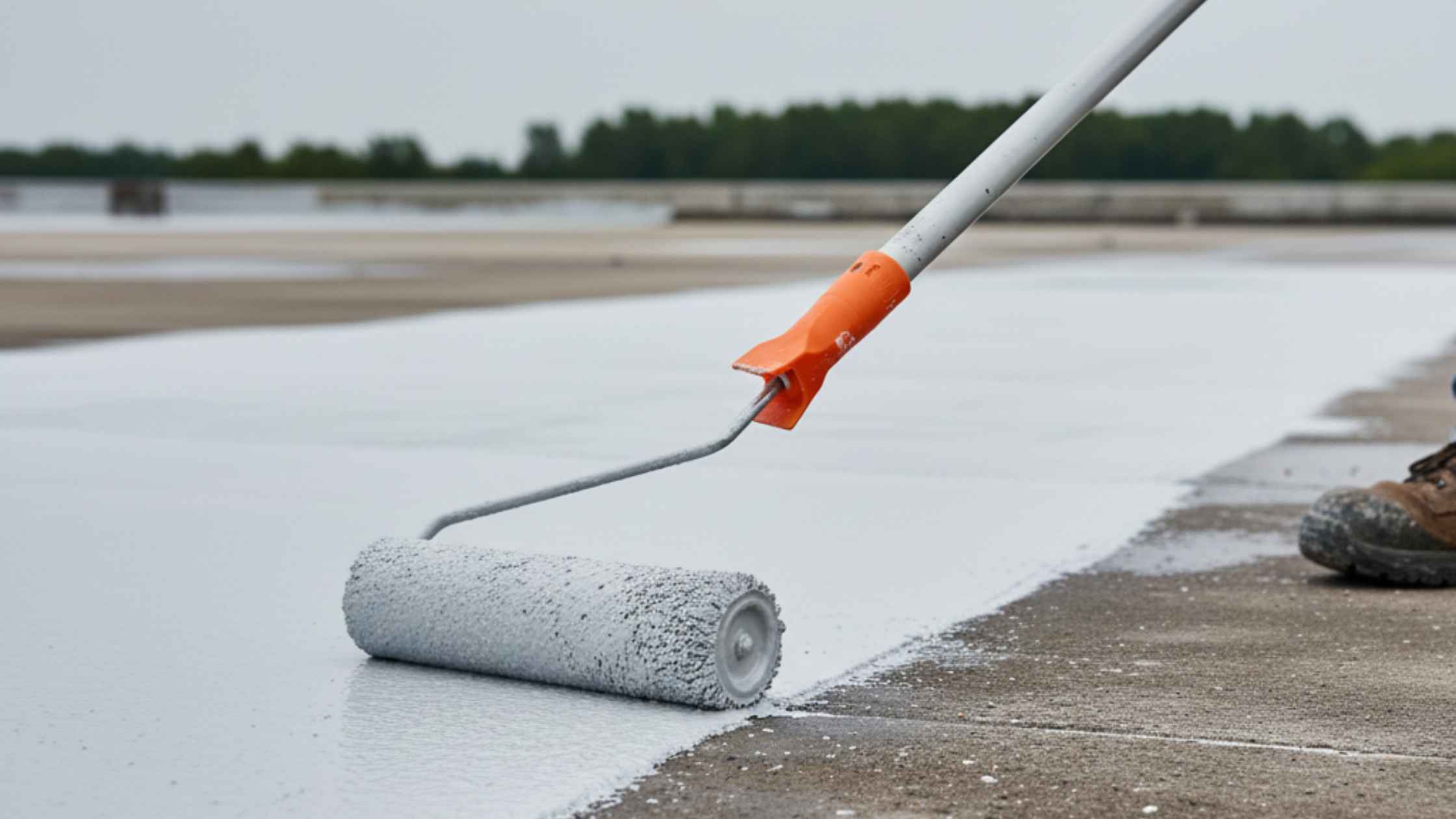
Today’s construction projects operate under demanding conditions. Extreme weather variations, stricter building regulations, and higher performance expectations have made waterproofing failures increasingly costly.
This makes material choice extremely crucial for projects, as it is no longer just a technical decision. It is also about risk management, long-term value, and protecting your project’s reputation.
This blog examines the key factors that truly matter when choosing the right waterproofing system, in this case, rubber vs polyurethane systems.
Contents
- 1 What is Liquid Rubber Waterproofing?
- 2 What is Polyurethane Waterproofing?
- 3 What are the Key Performance Differences?
- 4 Making a Decision
- 5 Sunanda Global’s Polyurethane Solutions
- 6 Make the Right Choice with Sunanda Global
- 7 FAQs
- 8 Q1. What is the main difference between liquid rubber and polyurethane?
- 9 Q2. Is polyurethane waterproofing worth the extra cost?
- 10 Q3. Which performs better in the Indian climate?
- 11 Q4. Can polyurethane be applied to damp surfaces?
- 12 Q5. Which is better for roof waterproofing?

What is Liquid Rubber Waterproofing?
Liquid rubber waterproofing has been around for a long time. It is a straightforward application process that is familiar to most contractors. It has a lower upfront material cost and also gives water resistance for basic applications.
Many commonly used liquid rubber systems are bitumen-based with polymer modification. When applied, it creates a flexible membrane that blocks water penetration. For uncomplicated, low-exposure projects, it provides optimal performance.
However, construction demands have evolved faster than liquid rubber technology.
What is Polyurethane Waterproofing?
Polyurethane waterproofing relies on a completely different molecular structure when compared to rubber-based systems. It has an advanced polymer chemistry with exceptional molecular bonding. It has true elastomeric properties and engineered performance characteristics.
Modern PU systems come in two main types:
- Single-component systems, which are moisture-cured and incredibly user-friendly
- Two-component systems that offer even higher performance through chemical reaction when the components are mixed
What are the Key Performance Differences?
Understanding the rubber vs polyurethane performance gap helps you make informed decisions for your waterproofing projects.
| Performance Aspect | Liquid Rubber Waterproofing | Polyurethane Waterproofing |
| Flexibility & Movement | Provides basic flexibility but has limited ability to accommodate long-term structural movement and crack development. Performance may reduce as movement increases. | A true elastomer with high elongation capacity. Effectively bridges existing and future cracks and accommodates long-term structural movement without failure. |
| UV Resistance | Can degrade under prolonged UV exposure, leading to chalking, colour fading, and increased brittleness. Requires more frequent maintenance or recoating over time. | Formulated with superior UV stability. Retains flexibility, strength, and waterproofing performance with minimal surface deterioration under prolonged sun exposure. |
| Chemical Resistance | Most liquid rubber systems have limited resistance to oils, fuels, salts, and certain chemicals. May soften or swell under chemical exposure, leading to premature failure. | Offers excellent resistance to a wide range of chemicals, including oils, salts, mild acids, and alkalis. Performs reliably in aggressive and industrial environments. |
| Temperature Performance | Shows reduced flexibility in extreme cold and may soften or lose strength in high temperatures. More vulnerable to damage from thermal cycling. | Maintains elastomeric properties across a wide temperature range. Remains flexible in cold conditions and stable in high heat, ensuring consistent year-round protection. |
| Adhesion to Substrate | Can achieve good initial adhesion, but may be prone to delamination over time, depending on surface condition and moisture sensitivity of the formulation. | Forms a strong mechanical bond with concrete, metal, and wood. Moisture-cured systems tolerate minor surface dampness and create a durable, monolithic layer. |
| Application | Simple and familiar application process. Limited ability to tailor performance or incorporate advanced features. | Available in single- and two-component systems. Offers controlled curing, better performance tuning, and advanced features for professional applications. |
| Durability | Requires more frequent inspection, maintenance, and recoating, increasing lifecycle costs and operational disruption. | Engineered for long-term, low-maintenance performance. Typically delivers two to three times longer service life when correctly specified and applied. |
Making a Decision
When specifying waterproofing systems, the rubber vs polyurethane choice directly impacts your project’s long-term performance and lifecycle costs.
Choose liquid rubber when:
- Budget constraints are absolute
- Project is temporary or short-term
- Application is truly low-exposure with minimal UV or chemical contact
Choose polyurethane when:
- Long-term durability is essential
- Exposed to harsh UV conditions
- Chemical resistance is required
- Temperature extremes are common
- Minimal maintenance is preferred
- Project demands reliability and performance
For most modern construction projects, especially those exposed to India’s challenging climate, polyurethane delivers superior value despite higher initial costs.
Sunanda Global’s Polyurethane Solutions
ELASTOROOF 2K
A professional-grade, two-component polyurethane system for demanding applications. It is ideal for waterproofing roofs, podiums, bridge decks, and aggressive environments.
It is long-lasting and resistant to puncture and damage. It is suitable for both vertical and horizontal surfaces.
SUNPRUFE PU1K
A professional-grade, high-build liquid-applied membrane. It is ideal for creating a thick, seamless waterproofing barrier on roofs, terraces, and external walls.
It provides a strong and flexible membrane and can be easily applied by brush, roller, wiper, squeegee, or spray. It also eliminates the need for a reinforcing layer.
Make the Right Choice with Sunanda Global
With over 45 years of expertise, Sunanda Global leads in innovation in construction chemical coatings. We invest 5% of annual revenue in R&D, focusing 60% of our efforts on LEED-compliant and eco-friendly products.
As the best waterproofing company, our low-VOC, environmentally conscious water leakage solutions deliver top performance. Moreover, Sunanda Global provides full support: from technical advice to vetted partners. With us, you can expect reliable on-site execution through trusted waterproofing contractors in Ahmedabad, Chennai, Hyderabad, Mumbai, and other major cities.
Contact Sunanda Global for a free consultation on waterproofing solutions and ensure maximum durability for your infrastructure.
FAQs
Q1. What is the main difference between liquid rubber and polyurethane?
The core difference is chemistry. Liquid rubber is a basic bitumen-based coating. Polyurethane is a high-performance elastomer engineered for superior long-term durability, flexibility across extreme temperatures, UV resistance, and chemical stability, resulting in a much longer lifespan.
Q2. Is polyurethane waterproofing worth the extra cost?
Yes. While polyurethane costs more upfront, it saves significantly over time. Liquid rubber requires frequent recoating and early replacement. Polyurethane lasts decades with minimal maintenance, making its total long-term ownership cost lower. It’s an investment in lasting protection.
Q3. Which performs better in the Indian climate?
Polyurethane is the clear choice for India’s harsh conditions. It withstands intense UV rays, monsoon rains, and extreme temperature swings, from freezing cold to scorching heat, without degrading. Liquid rubber breaks down quickly under these stresses.
Q4. Can polyurethane be applied to damp surfaces?
Certain polyurethane systems tolerate minor surface dampness better than liquid rubber, which needs perfectly dry surfaces. Products designed for moisture-curing can handle this, but for the best bond, surfaces should be as dry as possible.
Q5. Which is better for roof waterproofing?
For any exposed roof, polyurethane is vastly superior. It is specifically formulated to endure direct sun, rain, and thermal cycling for decades. Liquid rubber degrades rapidly on roofs, often needing replacement within a few years. Polyurethane is the reliable, long-term solution.