

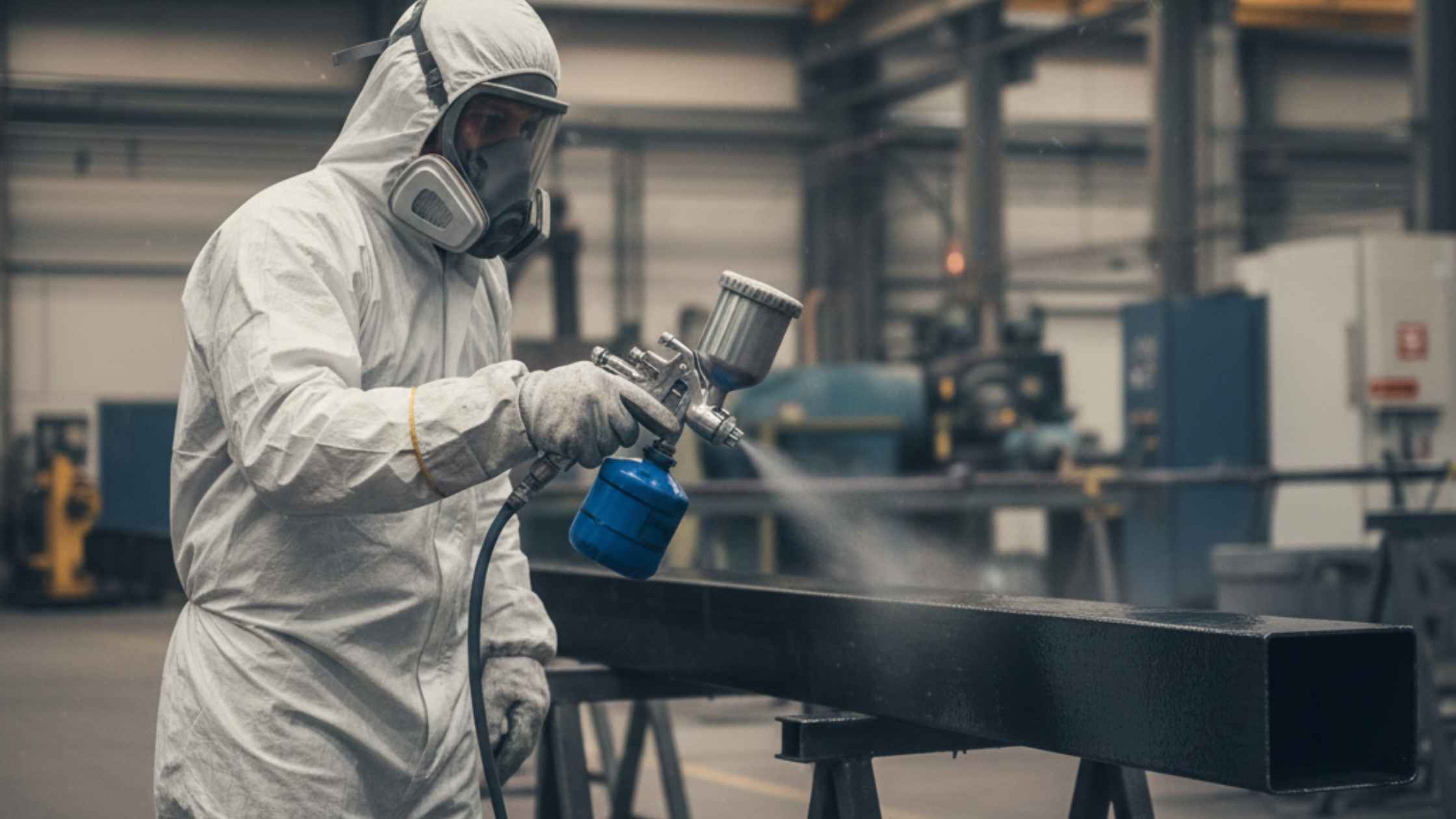
Public buildings carry unique responsibilities. Shopping centers host thousands daily. Transit hubs move crowds continuously. Sports arenas fill with tens of thousands during events. Convention centers gather large groups in confined spaces.
When fire strikes these spaces, every second counts. The structural integrity of the building directly impacts evacuation success and emergency response effectiveness.
This blog discusses the significance of specialized fire protection coatings in such spaces.
Contents
- 1 Why Composite Buildings Need Specialized Fire Protection
- 2 The Public Safety Imperative
- 3 What are the Building Code Requirements for Public Structures?
- 4 Selecting Appropriate Protection for Different Building Areas
- 5 What are the Installation Considerations for Public Building Projects?
- 6 How to Ensure Long-Term Performance?
- 7 Sunanda Global’s Fire Protection Solutions
- 8 Making Your Decision with Sunanda Global
- 9 Frequently Asked Questions
- 10 Q1: Why do composite buildings need fire protection coatings?
- 11 Q2: What is the difference between intumescent and cementitious fire protection?
- 12 Q3: Can fire protection coatings be applied during building renovations?
- 13 Q4: Why choose Sunanda Global over other providers?

Why Composite Buildings Need Specialized Fire Protection
Modern composite construction combines steel and concrete to create efficient, cost-effective structures. These buildings rise faster and use materials more economically than traditional construction.
The challenge appears during fire exposure:
Steel loses strength rapidly when heated. Without protection, collapse becomes inevitable within minutes.
Composite floor systems compound the risk. Steel beams supporting concrete decks create concealed spaces where fire spreads unseen. By the time flames become visible, structural damage may already be severe. Public buildings cannot afford this vulnerability.
The Public Safety Imperative
Buildings serving public functions face elevated fire safety expectations for clear reasons:
- High Occupancy Density: Evacuation takes longer in crowded spaces
- Unfamiliar Occupants: Visitors do not know the exit routes, increasing confusion and danger during an emergency evacuation
- Mixed-Use Complexity: Buildings combining retail, dining, and parking have varied fire risks, complicating safety planning
- Legal and Liability Exposure: Building owners face severe legal and financial consequences if fire protection coating fails and causes injury or death
What are the Building Code Requirements for Public Structures?
Regulations governing public buildings establish minimum fire resistance standards based on building characteristics:
- Structure Height: Taller buildings require longer fire resistance to provide more time for evacuation and emergency response
- Occupancy Load: Facilities designed for hundreds or thousands of people need higher levels of protection than smaller buildings
- Exit Route Design: Buildings with limited or complex exit paths need structural elements that can withstand fire longer.
- Sprinkler Systems: While sprinkler systems control fire spread, they do not protect the structural steel itself from heat damage, so separate fireproofing is still essential.
Selecting Appropriate Protection for Different Building Areas
Public composite buildings require strategic fire protection planning across different functional zones:
Public-Facing Spaces (lobbies, concourses, dining areas):
- Exposed steel requires intumescent coatings
- Aesthetic considerations drive product selection
Back-of-House Areas (mechanical rooms, service corridors, storage):
- Concealed steel suits cementitious protection
- Cost efficiency and durability matter most
Parking Structures (whether above or below grade):
- Hydrocarbon fire risk requires specialized protection
- Vehicle access increases the impact risk to coatings
Mixed-Use Zones (where different areas connect):
- Transition between coating types requires planning
- Maintaining continuous protection across boundaries
- Coordinated application ensures no protection gaps
What are the Installation Considerations for Public Building Projects?
Successful fire protection coating application in public buildings requires attention to project-specific factors:
Occupied Building Challenges
Maintaining building operations during coating application requires careful planning:
- Phased application schedules minimize disruption
- Low-odour products reduce occupant impact
- After-hours work protects daytime operations
- Adequate ventilation during application and curing
Surface Preparation Requirements
Steel surfaces must meet cleanliness standards before coating application. Inadequate preparation causes adhesion failures regardless of coating quality:
- Remove mill scale, rust, and previous coatings
- Achieve specified surface profile for mechanical bond
- Ensure dry substrate before application
- Protect prepared surfaces from contamination
Quality Verification
Public buildings warrant thorough quality control during fire protection application:
- Film thickness measurements verify adequate coverage
- Adhesion testing confirms proper bonding
- Visual inspections identify application defects
- Documentation supports code compliance verification
How to Ensure Long-Term Performance?
Fire protection coatings require periodic inspection and maintenance to ensure continued effectiveness:
- Regular Inspection Programs: Schedule periodic checks to identify any physical damage or wear to the coatings from building use or the environment
- Prompt Repair: Immediately fix any scratches, gouges, or peeling to restore the continuous protective barrier
- Renovation Coordination: Always review and upgrade the fire protection whenever the building structure, use, or systems are modified
Sunanda Global’s Fire Protection Solutions
Sunanda Global offers specialized fire protection coating systems for diverse project requirements.
SUNNOFLAME IP – Water-Based Intumescent Paint
This water-based system produces minimal odour and low VOC emissions.
SUNNOFLAME IP provides thin-film fire protection for exposed structural steel in public building applications. This water-based intumescent coating maintains architectural aesthetics while delivering required fire ratings.
SUNNOFLAME IP 1709 – Epoxy-Based Intumescent Paint
This epoxy-based system provides durability and fire protection under harsh conditions.
SUNNOFLAME IP 1709 addresses severe fire scenarios, including hydrocarbon fires. This advanced intumescent system protects against rapid temperature rise conditions in parking structures, loading docks, and areas with petroleum-based fire risks.
SUNNOFLAME MORTAR – Fire Barrier Mortar
SUNNOFLAME MORTAR is a dry white powder consisting of inorganic compounds and perlite, used to reinstate the fire resistance performance of flexible and rigid walls and floor constructions, where they are penetrated by various cables and metallic pipes.
This cementitious system provides cost-effective protection for large areas where aesthetics are not primary concerns.
Making Your Decision with Sunanda Global
With over 45 years of expertise, Sunanda Global leads in innovation for construction chemical coatings. The company invests 5% of annual revenue in R&D, focusing 60% of efforts on LEED-compliant and eco-friendly products.
As a leading fire protection solutions provider and waterproofing company, Sunanda’s coating systems deliver comprehensive protection engineered for composite buildings serving public functions. Reliable on-site execution through trusted fireproofing and waterproofing contractors in Bangalore, Chennai, Delhi, and other major cities ensures proper installation.
Contact Sunanda Global for expert consultation on fire protection coatings for public building projects.
Frequently Asked Questions
Q1: Why do composite buildings need fire protection coatings?
Composite buildings using structural steel lose strength rapidly when exposed to fire. Steel can reach critical failure temperatures within minutes. Fire protection coatings insulate steel from heat, maintaining structural integrity long enough for safe evacuation and emergency response.
Q2: What is the difference between intumescent and cementitious fire protection?
Intumescent coatings are thin, paint-like products that expand when heated to form insulating char. They’re ideal for visible steel. Cementitious coatings are thick, spray-applied systems better suited for concealed steel and cost-sensitive, large areas. Both provide effective fire protection for different applications.
Q3: Can fire protection coatings be applied during building renovations?
Yes, fire protection coatings can be applied in occupied buildings during renovations. Low-odour products like SUNNOFLAME IP minimize disruption. Phased application schedules and after-hours work allow coating application while maintaining building operations.
Q4: Why choose Sunanda Global over other providers?
With 45+ years of expertise, a strong R&D focus on eco-friendly solutions, and a nationwide network of trusted waterproofing and fireproofing contractors, Sunanda Global offers everything from technical consultation and product supply to quality-assured execution and post-project support.