

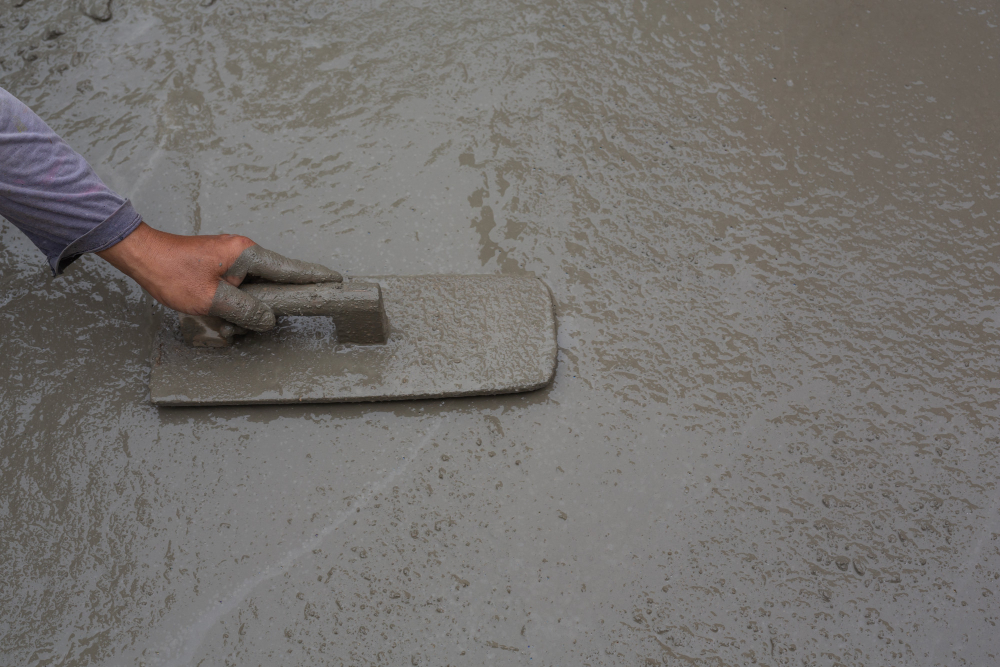
Water infiltration is one of the most persistent challenges in concrete construction. While external membranes offer surface protection, integral waterproofing takes a different approach by making the concrete itself impermeable. This is achieved through adding admixtures with specialized chemical compounds added during concrete mixing that modify the material’s properties from within.
Understanding the different types of integral waterproofing admixtures and their specific applications helps architects, engineers, and contractors select the optimal solution for each project requirement.
Contents
- 1 4 Types of Integral Waterproofing Admixtures
- 2 Sunanda Global’s Waterproofing Admixture Solutions
- 3 Why Choose Sunanda Global for Integral Waterproofing?
- 4 FAQs
- 5 Q1. What is the difference between integral waterproofing and surface-applied waterproofing?
- 6 Q2. Can integral waterproofing admixtures be used in all types of concrete?
- 7 Q3. How much do integral waterproofing admixtures cost compared to external membranes?
- 8 Q4. Do integral waterproofing admixtures affect concrete strength?
- 9 Q5. Can integral waterproofing be applied to existing concrete structures?

4 Types of Integral Waterproofing Admixtures
Integral waterproofing admixtures generally fall into several broad categories: pore-blockers, crystalline, hydrophobic, and shrinkage-reducing admixtures. Each works via a different mechanism, and each offers different strengths and trade-offs.
While integral waterproofing often reduces water absorption and improves durability, performance depends on correct dosage, mix design, curing, and crack-joint detailing.
-
Pore-Blocking Admixtures
These admixtures physically reduce the size and connectivity of pores within the concrete matrix, making it significantly less permeable. They achieve this through chemical reactions that produce additional cementitious compounds or through physical filling of voids.
How it works:
Compounds react with calcium hydroxide (a concrete hydration byproduct) to form calcium silicate hydrates, the same material that gives concrete its strength. This secondary reaction fills capillary voids, creating an extremely dense, low-permeability concrete.
Key Advantages:
- Significantly reduces chloride ion penetration, critical for rebar protection
- Increases concrete compressive strength
- Minimizes porosity and capillary action
- Reduces carbonation depth and vapour transmission
-
Crystalline Waterproofing Admixtures
Crystalline technology represents the most advanced form of integral waterproofing. These admixtures contain reactive chemicals that combine with moisture and unhydrated cement particles to form insoluble crystalline structures within the concrete’s capillary pores and microcracks.
How it works:
The crystals grow throughout the concrete matrix, physically blocking water pathways. When cracks develop, incoming water reactivates dormant chemicals, triggering new crystal formation that seals the breach automatically, a self-healing capability unique to crystalline systems.
Key Advantages:
- Withstands extreme hydrostatic pressure
- Self-healing capability for dynamic cracks
- Long-lasting protection – crystals remain active throughout concrete lifespan
- Non-toxic, suitable for potable water structures
-
Shrinkage-Reducing Admixtures
Concrete shrinkage during curing creates microcracks which are primary pathways for water infiltration. Shrinkage-reducing admixtures prevent crack formation by compensating for volume loss, indirectly achieving waterproofing through crack prevention.
How it works:
These admixtures either reduce surface tension in the pore water minimizing capillary stress, or contain expansive compounds that counteract concrete’s natural tendency to shrink during hydration.
Key advantages:
- Substantially reduces drying shrinkage
- Minimizes crack formation during curing
- Improves long-term dimensional stability
- Reduces curling in slabs and screeds
-
Hydrophobic Admixtures
Hydrophobic admixtures work by coating the internal pore structure of concrete with water-repellant molecules. This creates a barrier that prevents water absorption while still allowing water vapour to pass through, maintaining the concrete’s breathability.
How it works:
Fatty acid derivatives or silicone-based compounds line the capillary pores, changing the concrete’s surface tension properties. Water droplets cannot penetrate the treated matrix but vapour can escape, preventing moisture accumulation.
Key Advantages:
- Substantially reduces water absorption
- Maintains concrete breathability preventing vapour lock
- Improves freeze-thaw resistance
- Reduces efflorescence and salt crystallization damage
Many projects also benefit from combining different admixture functions (for example, crystalline admixtures for foundation slabs and shrinkage-reducing admixtures for exposed plasters). Always confirm compatibility and follow manufacturer guidance and site trials.
Sunanda Global’s Waterproofing Admixture Solutions
POLYTANCRETE IWL – Integral Waterproofing Liquid Admixture
- Liquid admixture that reduces water permeability in concrete by up to 60%
- Blocks pores to minimize water seepage
- Increases concrete density and improves workability
- Ideal for: external plaster, roof slabs, terraces, bathrooms, water tanks, basements, and swimming pools.
Directions for Use:
- Add POLYTANCRETE IWL to the gauging water of the concrete mix
- Use 150-200ml per 50kg bag of cement as the standard dosage
- Do not add directly to the concrete or mortar, always mix with water first
- Ensure thorough mixing for uniform distribution throughout the concrete
SUNCRYSTALMIX- Crystalline Waterproofing Admixture
- Integrates into concrete to self-heal hairline cracks up to 0.5 mm
- Crystals reactivate with moisture, even years after application
- Resists water pressure up to 200 meters
- Effective for both positive and negative side applications
- Ideal for: reservoirs, foundations, swimming pools, treatment plants, tunnels, subways, vaults, and pre-cast concrete.
Directions for Use:
- Add directly to the concrete at any time during the batching process
- Preferably, add SUNCRYSTALMIX to the batching water for optimal distribution
- Mix thoroughly for ten minutes to ensure uniform dispersion
- Add the balance of materials by standard batching practices
- Can be easily added to a ready-mix truck or at the batch plant
SUNPLEX – Shrinkage Compensating Grout Admixture
- Prevents cracks in plaster by compensating for shrinkage
- Increases fluidity and pumpability
- Compatible with most cement types and mineral admixtures
- Ideal for: cavity filling, external plasters to reduce shrinkage cracks, cement pressure grouting, pre-cast and cast-in-place applications.
Directions for Use:
- Use 330gm pouch per 50kg bag of cement.
- Dry mix the cement and SUNPLEX using a mechanical mixer for homogeneous mixing
- Add water to achieve the desired consistency
- Place grout within 20 minutes of mixing to gain full benefit of expansion process
- Ensure thorough curing after application
Why Choose Sunanda Global for Integral Waterproofing?
With over 45 years of expertise, Sunanda Global leads in innovation in construction chemical coatings. We invest 5% of annual revenue in R&D, focusing 60% of our efforts on LEED-compliant and eco-friendly products.
As the best waterproofing company, our low-VOC, environmentally conscious water leakage solutions deliver top performance. Moreover, Sunanda Global provides full support: from technical advice to vetted partners. With us, you can expect reliable on-site execution through trusted waterproofing contractors in Ahmedabad, Chennai, Hyderabad, Mumbai, and other major cities.
Contact Sunanda Global for a free consultation on integral waterproofing solutions and protect your infrastructure investment through lasting protection.
FAQs
Q1. What is the difference between integral waterproofing and surface-applied waterproofing?
Integral waterproofing is mixed into the concrete, making the entire mass water-resistant. Surface-applied waterproofing is a coating or membrane applied to the exterior. Integral protection is long-lasting and built-in, while surface systems are external and can degrade.
Q2. Can integral waterproofing admixtures be used in all types of concrete?
Yes, they are compatible with most concrete types, including ready-mix and precast. The key is using the correct dosage based on the cement content for the specific project.
Q3. How much do integral waterproofing admixtures cost compared to external membranes?
Integral waterproofing typically offers significant cost savings. It reduces material. labour and time expenses when compared to installing external membranes, especially on complex projects.
Q4. Do integral waterproofing admixtures affect concrete strength?
No, they generally do not negatively affect strength. Pore-blocking types can even increase compressive strength by making the concrete denser.
Q5. Can integral waterproofing be applied to existing concrete structures?
No, it can only be added during new concrete mixing. For existing structures, surface treatments or injection systems are suitable solutions.