

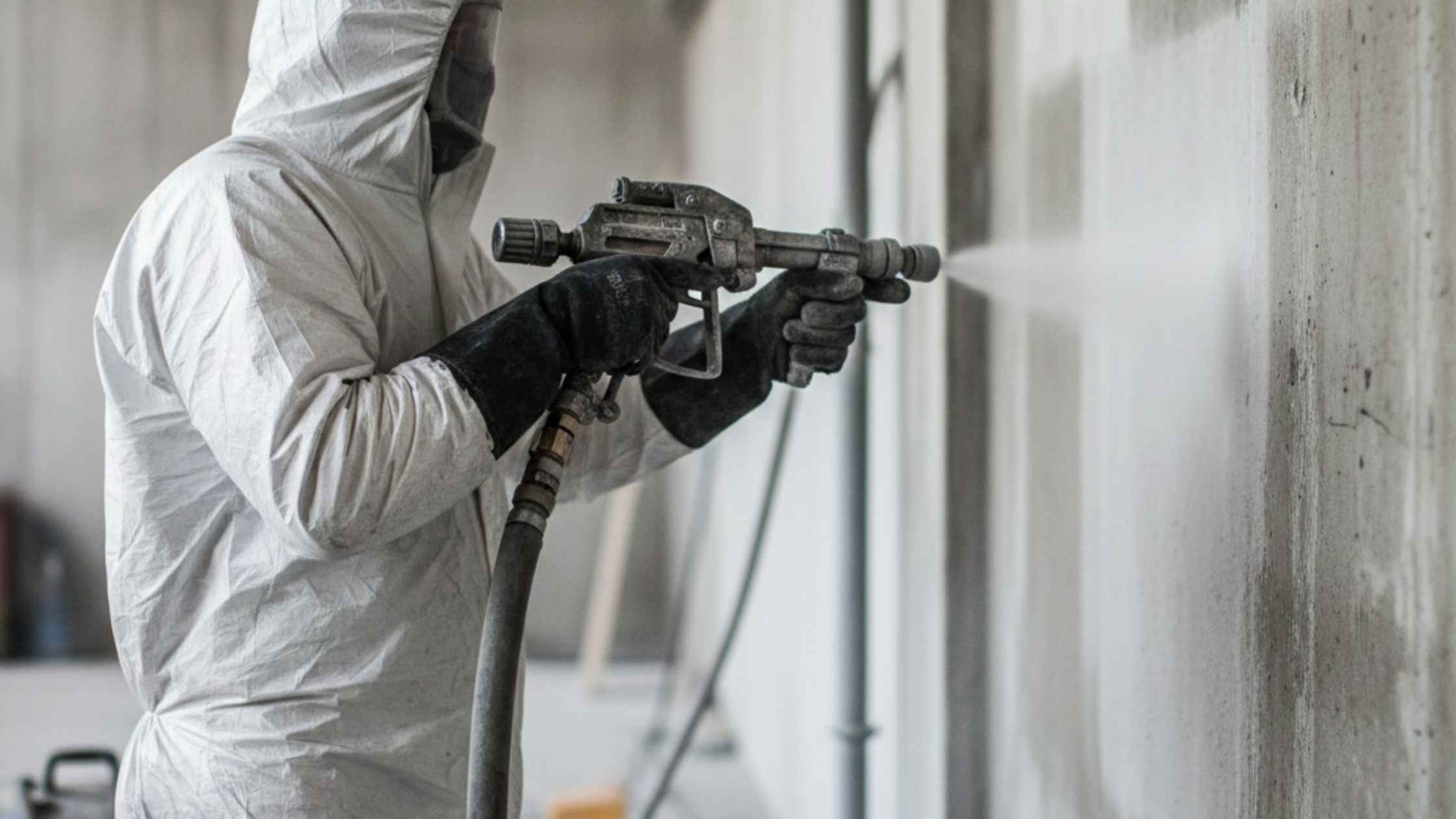
Can protecting your concrete structures actually contribute to green building certification? As the construction industry increasingly prioritizes sustainability, the intersection of structural preservation and environmental responsibility has become critical.
Anti-carbonation coating systems now serve a dual purpose: extending the lifespan of concrete structures while helping projects achieve LEED (Leadership in Energy and Environmental Design) certification.
This blog will discuss how modern anti-carbonation coatings protect concrete from carbonation damage while meeting sustainability standards.
Contents
- 1 What is Carbonation and Its Environmental Impact?
- 2 What are the LEED Certification Basics for Material Selection?
- 3 What Makes Anti-Carbonation Coatings LEED-Compliant?
- 4 What are the Broader Environmental Benefits?
- 5 Sunanda Global’s LEED-Compliant Anti-Carbonation Solutions
- 6 Why Choose Sunanda Global’s Sustainable Concrete Protection?
- 7 FAQs
- 8 Q1. What is concrete carbonation?
- 9 Q2. How do these coatings help achieve LEED points?
- 10 Q3. What makes a coating LEED-compliant?
- 11 Q4. Can they be applied to old structures?

What is Carbonation and Its Environmental Impact?
Carbonation is a silent threat. Atmospheric carbon dioxide seeps into concrete, lowering its natural alkalinity. This destroys the protective environment around steel reinforcement, leading to corrosion.
The corroding steel expands, causing concrete to crack and spall. This results in a drastically shortened building lifespan and major repairs.
The environmental cost is significant. Premature failure means:
- Wasted embodied carbon from the original concrete
- Massive construction waste from demolition
- Additional CO2 emissions from manufacturing replacement materials and executing repairs
Preventing this damage from the start is a foundational sustainability strategy.
What are the LEED Certification Basics for Material Selection?
LEED is the global benchmark for green buildings. Its “Materials and Resources” category directly influences coating selection. Key factors include:
- Low VOC Emissions: Credits reward products that improve indoor air quality
- Recycled Content: Using materials with post-consumer or post-industrial recycled content is favoured.
- Product transparency: Environmental Product Declarations (EPDs) that detail a product’s lifecycle impact are increasingly important.
- Durability: Long-lasting products reduce future resource consumption and waste, a core sustainability principle.
Anti-carbonation coatings excel here by preventing deterioration, which minimizes long-term material needs.
What Makes Anti-Carbonation Coatings LEED-Compliant?
Not all protective coatings are created equal. LEED-compliant anti-carbonation coatings share specific traits:
- Low-VOC Formulations: They meet strict VOC limits, unlike high-emission solvent-based alternatives
- Superior Durability: They outlast basic coatings, reducing reapplications and lifecycle impacts
- Verified Performance: EPDs provide transparent data needed for LEED documentation
- Breathability: They block CO2 but allow moisture vapour to escape, preventing trapped moisture and related damage
What are the Broader Environmental Benefits?
The advantages extend beyond LEED paperwork:
- Extends Building Life: Protection can add years to a structure, preserving its embodied carbon
- Reduced Repair Waste: It prevents tons of concrete and steel from ending up in landfills.
- Saves Energy: Reflective variants can lower cooling costs by reducing heat absorption
- Minimizes Future Disruption: Preventing repairs avoids the environmental footprint of future construction activity
Sunanda Global’s LEED-Compliant Anti-Carbonation Solutions
Sunanda Global has a range of anti-carbonation coating systems specifically engineered for both superior protection and LEED compliance, addressing the unique challenges of Indian construction environments.
SUNDEKOTE-SP: Premium Elastomeric Anti-Carbonation Coating
This formulation can be used as a waterproof, anti-carbonation external surface coating. It has high durability with minimized reapplication frequency and reduces long-term environmental impact.
SUNEXT-8: Advanced Acrylic-Based Coating System
This coating incorporates sustainable manufacturing practices and protects structures from water leakage and the formation of fungi and algae. It offers excellent weather resistance and aesthetic versatility. SUNEXT-8 also offers UV protection.
SUNGARD APR: Specialized Anti-Carbonation and Protective Coating
This two-component, acrylic, polyisocyanate reticulant-based (APR) coating provides excellent chemical and UV resistance. It has an abrasion-resistant film and is equally effective on concrete or metal substrates. It is also perfect for coatings of MS pipelines and structural steel.
Why Choose Sunanda Global’s Sustainable Concrete Protection?
With over 45 years of experience in Indian industrial construction, Sunanda Global leads in innovation in construction chemical coatings. We invest 5% of annual revenue in R&D, focusing 60% of our efforts on LEED-compliant and eco-friendly products. We also hold ISO 9001:2015 certification.
As the best waterproofing company in India, our low-VOC, environmentally conscious water leakage solutions deliver top performance. Moreover, Sunanda Global provides full support: from technical advice to vetted partners. With us, you can expect reliable on-site execution through trusted waterproofing contractors in Chennai, Bangalore, Hyderabad, Mumbai, and other major cities.
Contact Sunanda Global for anti-carbonation coatings that combine scientific innovation, proven durability, and reliable performance backed by decades of expertise.
FAQs
Q1. What is concrete carbonation?
Carbonation occurs when atmospheric CO2 penetrates concrete, lowering its pH and causing steel reinforcement to corrode. This leads to cracking, structural damage, and reduces the building’s sustainable lifespan.
Q2. How do these coatings help achieve LEED points?
They contribute through low VOC content (air quality), recycled materials, and extended durability that reduces long-term waste. Their EPDs provide essential documentation for certification submissions.
Q3. What makes a coating LEED-compliant?
Key traits are very low VOC content, verified durability, published Environmental Product Declarations (EPD), and often recycled material content. Breathability is also a critical performance factor.
Q4. Can they be applied to old structures?
Yes, after proper surface preparation. All unsound concrete must be removed. The coating then protects the repaired structure from future carbonation, extending its service life sustainably.