


SUNEXT-8: Advanced Acrylic Anti-Carbonation Exterior Coating
4.2 Stars Rating
| Material | Chemical |
| Brand | SUNANDA |
| Product | SUNACE |
| Style | Compact |
| Item Volume | 1 Litre |
SUNEXT-8: Advanced Acrylic Anti-Carbonation Exterior Coating
Anti-Carbonation Paint and Its Significance
Anti-carbonation paint is a protective exterior coating designed to shield concrete structures from carbonation, a chemical process in which atmospheric carbon dioxide reduces with concrete alkalinity, leading to corrosion of steel reinforcement. This specialized coating creates an impermeable barrier that prevents CO2 penetration while allowing moisture vapour to escape, maintaining structural integrity.
Anti-carbonation paint is essential for extending the lifespan of RCC structures, particularly in urban and coastal environments with high pollution and humidity levels. These formulations also offer waterproofing, UV resistance, thermal insulation, and anti-fungal properties.
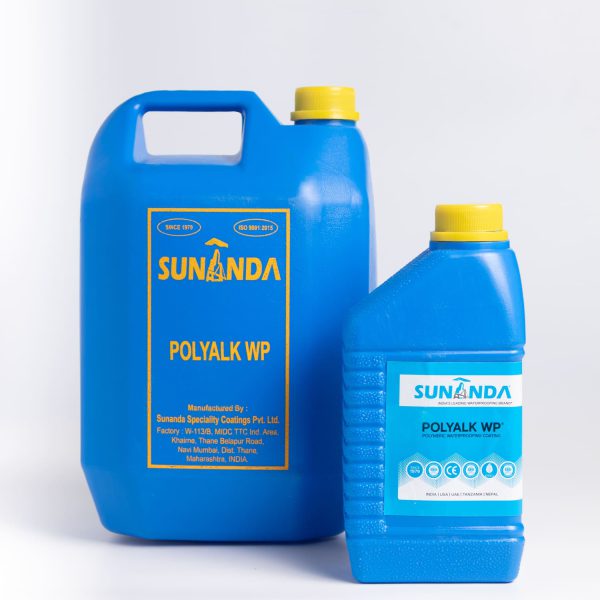
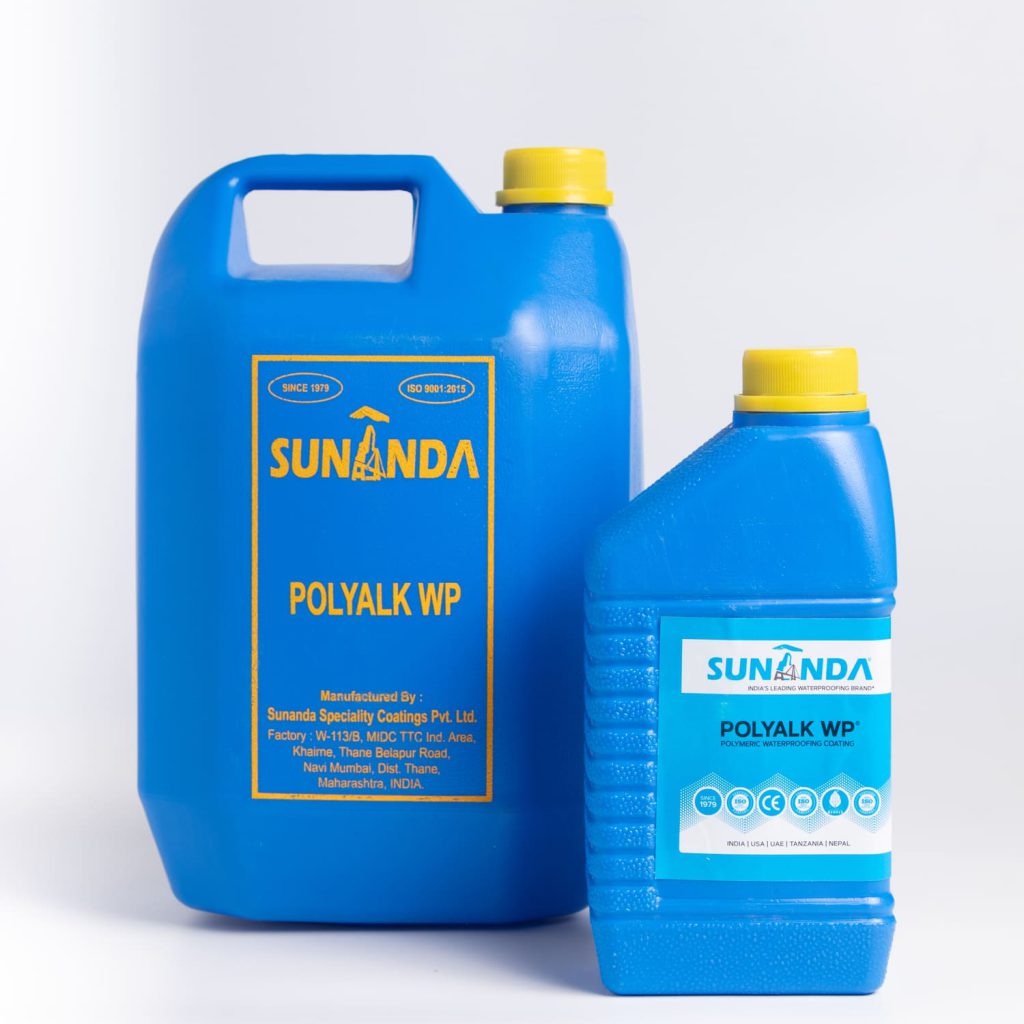
POLYALK EP: Why High-Performance Acrylic Chemical Solution Outperforms SBR Chemicals for Mortar Modification
Acrylic’s Advanced Bonding and SBR’s Limitations
SBR chemical (Styrene-Butadiene Rubber chemical) is a traditional synthetic polymer emulsion that has enhanced cement-based systems for decades. While it provides basic enhancements to mortar properties, conventional SBR chemical systems face significant limitations like poor UV resistance, limited flexibility under extreme temperatures, and compatibility issues with modern construction materials.
The construction industry has evolved to advanced polymer technology. Unlike SBR chemicals’ rubber-based chemistry, acrylic polymer and polymer-modified mortar solutions form stronger covalent bonds with cement particles, creating a superior co-matrix structure. This delivers enhanced adhesion, impermeability, flexural strength, excellent UV stability, and environmental resistance, making it ideal for RCC members, the rehabilitation of heritage structures, and the repair of any other structure in the marine environment.
POLYALK EP: Why Advanced Acrylic Polymer Outperforms SBR Polymer for Mortar Modification
High-Performance Acrylic Bonding Technology vs.
Conventional SBR Polymer Systems
SBR polymer (Styrene-Butadiene Rubber polymer) is a traditional synthetic polymer emulsion used to enhance cement-based systems for decades. While SBR polymers provide basic improvements in mortar properties, they face significant limitations, including poor resistance to ultraviolet radiation, limited flexibility at extreme temperatures, and compatibility issues with modern construction materials.
The construction industry has evolved to advanced polymer technology. Unlike the rubber-based chemistry of SBR polymers, acrylic polymers and acrylic polymer-modified mortar solutions create a superior co-matrix structure. This delivers enhanced adhesion, impermeability, flexural strength, excellent UV stability, and environmental resistance, making it ideal for RCC members, the rehabilitation of heritage structures, and the repair of any other structure in the marine environment.
SUNACE: Acrylic Rooftop Heat Treatment
Roof Cooling Solutions and Their Significance
Roof cooling solutions utilize high-reflective coatings that deflect solar radiation, significantly reducing heat absorption and lowering internal temperatures. These specialized coatings substantially reduce cooling energy consumption, extend roof lifespan by minimizing thermal stress, prevent water leakages and dampness, and create more comfortable indoor environments.
Rooftop heat treatment systems deliver measurable energy savings while protecting structures against environmental degradation and extreme climatic conditions.
- Application & Activity
- Features & Benefits
- User Guidelines
- Protects external surfaces against carbonation and similar environmental attacks
- It provides a durable and long-lasting finish to the external surface
- Can withstand extreme climatic changes like heavy rainfall, high humidity, and heat
- Single-component liquid applied by brush
- Protects against water leakages and dampness
- Prevents a rise in internal temperature
- No peeling or cracking
- Prevents the formation of fungi and algae
- Excellent UV stability
- Fairly good resistance to normal wear and tear
- No priming coat is needed, saving expenses and time.
- Surface Preparation & Cleaning:
- Life and performance depend on cleaning quality.
- Remove dirt, loose particles, flaking paint, etc.
- Check for cracks or openings.
- Fill cracks with POLYFILL AR; use POLYALK EP for specialised cracks.
- Remove scales, rust, and grease from steel surfaces.
Application:
- Open the container and stir well to achieve uniform consistency.
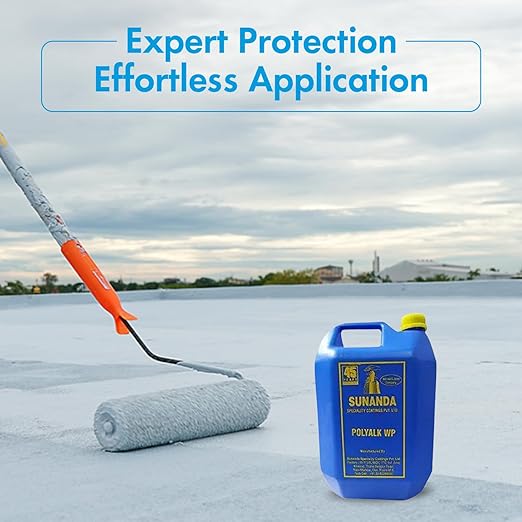
- For the prime coat, mix 1 L SUNACE with 1000 ml of water. Apply by brush, roller, or spray.
- For the top coat, mix 1 L SUNACE with 400 ml of water. Stir well.
- Apply by brush, roller, or spray.
- Apply two or three coats over the prime coat as recommended.
- Maintain 4-6 hour intervals between coats.
- During the entire application



Frequently asked questions (FAQ)
Q. What are the different types of waterproofing coats?
There are different types of waterproofing coatings including acrylic elastomeric coatings, polyurethane coatings, polymer-cementitious coatings, epoxy coatings etc. Choosing the right type depends on your specific needs, surface material, budget, and skills. Always consult the manufacturer’s instructions and research before applying any waterproofing coat.
Q. What chemical is used for waterproofing?
Waterproofing chemicals come in many forms, but some widely used chemicals are acrylic polymers and polyurethanes. They can form flexible, durable membranes ideal for roofs and exposed surfaces. The best choice depends on the specific application and material being protected.
Q. Which waterproofing is best for the outside walls?
The best waterproofing for outside walls depends on your needs. Factors like budget, surface type, etc, should be considered. Elastomeric waterproofing is flexible for accommodating cracks and movement. Polymeric-cementitious waterproofing coatings are strong and durable and are great for smaller wet areas while being versatile and long-lasting.
Q. Is epoxy coating waterproofing?
Epoxy can be waterproof, but depends on type and application. Some epoxies offer excellent water resistance for floors, countertops, and specific surfaces. However, not all are designed for exposed walls or extreme water exposure. Choose specific waterproofing epoxies and ensure proper application for best results.
Q. What is PU coating?
PU coating, or polyurethane coating, is a type of resin used to make waterproofing coatings. It is known for its flexibility, and resistance to abrasion, chemicals, and water. This coating enhances material lifespan and is widely used in outdoor gear, furniture, and flooring for its robustness and aesthetic appeal.
What are roof cooling solutions, and how do they work?
Roof cooling solutions are reflective coatings that deflect solar heat away from surfaces. They contain special pigments that reflect UV rays, reducing heat absorption and lowering rooftop temperatures, keeping interiors cooler naturally.
How do roof cooling solutions reduce electricity bills?
Roof cooling solutions minimize heat transfer into buildings, reducing air conditioning loads. It also lowers indoor temperatures, meaning less energy consumption, which results in significant monthly electricity savings, especially during summer months.
Can rooftop heat treatment be applied over existing paint?
Yes, rooftop heat treatment can be applied over properly prepared existing surfaces. After cleaning and crack repairs, the coating bonds effectively to old paint or concrete, providing immediate heat-reflective benefits without complete surface removal.
Does rooftop heat treatment require professional installation?
While DIY is possible for small areas, professional rooftop heat treatment ensures correct surface preparation, optimal thickness, uniform application, and proper curing. Professionals guarantee coverage quality that maximizes heat reflection and coating durability.
What are the limitations of traditional SBR polymer in construction?
Conventional SBR polymer suffers from poor UV resistance, limited temperature flexibility, reduced long-term durability, and compatibility issues. Modern acrylic polymer solutions like POLYALK EP overcome these limitations with superior performance, enhanced weather resistance, and extended service life.
Which polymer solution should I choose instead of the traditional SBR polymer?
For superior performance beyond SBR polymer, use POLYALK EP as a Polymer Cement Bonding Coat for substrate adhesion, Polymer-Modified Cement Mortar for repairs, and Polymer Rich Cement Mortar for crack filling to enhance durability across applications.
How do acrylic polymers outperform traditional SBR polymer?
Acrylic polymers like POLYALK EP increase interfacial adhesion and impermeability, enhance tensile and flexural strength, and compensate for shrinkage. This results in durable, crack-resistant repairs with extended service life and reduced maintenance needs.
What surface preparation is necessary before applying advanced polymer systems?
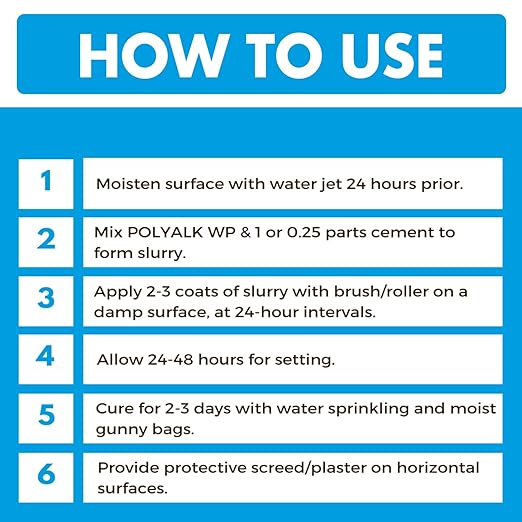
Surfaces must be thoroughly cleaned and free from loose particles, oil, and contaminants. Clean with a water jet 24 hours before application. Ensure proper mixing ratios following technical specifications for optimal performance.
What is anti-carbonation paint, and why is it important?
Anti-carbonation paint is a protective paint that prevents carbon dioxide from penetrating concrete surfaces. It stops the carbonation process that reduces concrete alkalinity and causes steel reinforcement corrosion. This extends the structure’s lifespan significantly.
How does anti-carbonation paint protect buildings?
Anti-carbonation paint forms an impermeable barrier against CO2 while allowing moisture to escape. This prevents concrete alkalinity loss, protects embedded steel from rust, stops structural deterioration, and maintains building strength despite environmental exposure.
Does anti-carbonation paint also provide waterproofing?
Yes, anti-carbonation paint offers dual protection by preventing carbonation and water penetration. It shields structures from dampness, leakages, and moisture-related damage while maintaining breathability, making it a comprehensive exterior protection solution.
Can anti-carbonation paint be applied over existing paint?
Yes, anti-carbonation paint can be applied over properly prepared existing structurally sound surfaces. In case repair is needed, that needs to be done first. Assuming the concrete surface is structurally perfect, after thorough cleaning, removing loose paint, cleaning any algae/fungus with SUNANTIFUNGAL, and repairing cracks, the coating bonds effectively to already painted substrates, providing immediate carbonation protection without complete removal.
What are the limitations of traditional SBR waterproofing in construction?
Conventional SBR waterproofing suffers from poor UV resistance, limited temperature flexibility, reduced long-term durability, and compatibility issues. Modern polymer solutions like POLYALK EP overcome these limitations with superior performance, enhanced weather resistance, and extended service life.
Which polymer solution should I choose instead of the traditional SBR chemical?
For superior performance beyond SBR waterproofing, use POLYALK EP as Polymer Cement Bonding Coat for substrate adhesion, Polymer-Modified Cement Mortar for repairs, Polymer Rich Cement Mortar for crack filling for enhanced durability across applications.
How do acrylic polymers outperform traditional SBR waterproofing?
Acrylic polymers like POLYALK EP increase interfacial adhesion and impermeability, enhance tensile and flexural strength, and compensate for shrinkage. This results in durable, crack-resistant repairs with extended service life and reduced maintenance needs.
What surface preparation is necessary before applying advanced polymer systems?
Surfaces must be thoroughly cleaned and free from loose particles, oil, and contaminants. Clean with a water jet 24 hours before application. Ensure proper mixing ratios following technical specifications for optimal performance.