

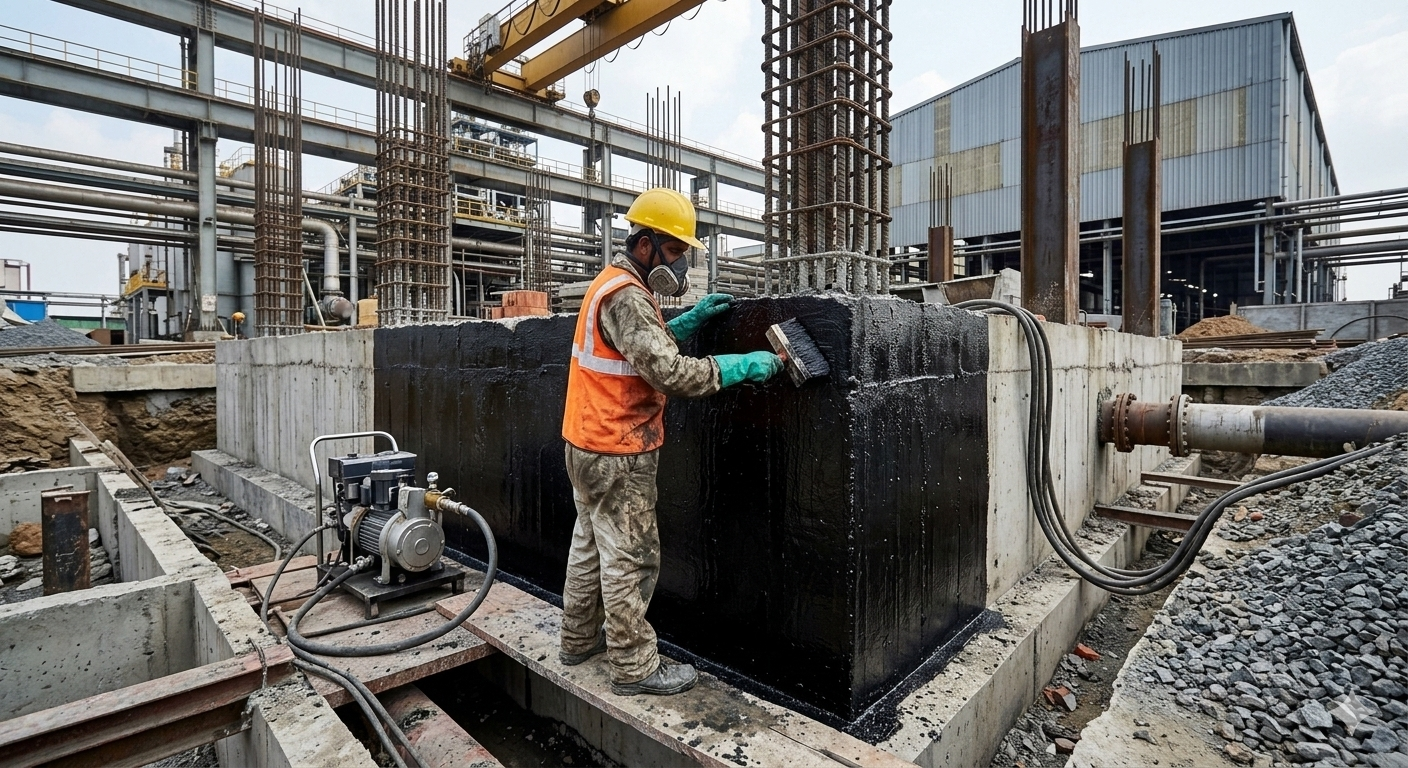
What lies beneath your building determines what stands above it, but foundation protection is sometimes overlooked in construction planning. Many architects and developers focus on visible elements, while the critical foundation waterproofing that ensures long-term structural integrity receives less attention. The consequences of this oversight are severe.
In this comprehensive guide, we’ll explore why waterproofing for foundations is essential, how water damages structural elements, the different protection methods available, and how to select the right system for your project.
By understanding these fundamentals, you’ll be equipped to make informed decisions that protect your investment from the ground up.
Contents
- 1 Why Foundation Waterproofing Matters
- 2 How Water Damages Foundations
- 3 What are the Different Waterproofing Methods?
- 4 What are the Consequences of Inadequate Protection?
- 5 Selecting the Right Waterproofing System
- 6 Sunanda Global’s Foundation Waterproofing Solutions
- 7 Choose Sunanda Global for Waterproofing for Foundations
- 8 FAQs
- 9 Q1. What are common waterproofing installation errors?
- 10 Q2. Can I waterproof from the inside if exterior access is impossible?
- 11 Q3. How do I repair an active leak through a foundation crack?
- 12 Q4. How often should waterproofing be inspected?
- 13 Q5. Why is curing time so critical?

Why Foundation Waterproofing Matters
Foundations face constant threats underground due to moisture, soil chemicals, and pressure. Water is concrete’s main enemy, triggering destructive processes.
The freeze-thaw cycle cracks concrete from within, and groundwater chemicals weaken the structural matrix. Most critically, moisture causes steel reinforcement to corrode and expand, fracturing the concrete.
Preventative waterproofing is a smart investment as post-construction repairs can cost 10-20 times more and cause major disruption.
How Water Damages Foundations
Water finds its way to foundations through multiple pathways, and understanding these mechanisms is crucial for effective protection.
- Hydrostatic Pressure: Rising groundwater pushes water through tiny concrete pores
- Capillary action: Concrete acts like a sponge, wicking moisture upward from the soil
- Lateral Migration: Poor drainage directs water sideways towards the foundation walls
- Condensation: Temperature differences cause dampness on cool foundation surfaces
Damage starts with stains and dampness and then progresses to cracks, spalling, and eventually structural failure.
What are the Different Waterproofing Methods?
Effective waterproofing for foundations employs multiple strategies, each suited to specific conditions and project requirements.
Positive-Side Waterproofing
This includes applying a barrier to the exterior wall to prevent water from reaching the concrete. This includes sheet membranes, liquid-applied coatings, and bentonite clay barriers.
Sheet membranes offer protection through pre-formed materials adhered to the foundation surfaces. They create continuous barriers, resistance to hydrostatic pressure, and chemical attack. High-performance liquid waterproofing membranes provide seamless protection that conforms to complex geometries and easily accommodates penetrations.
Cementitious Waterproofing
These crystalline or integral waterproofing systems work by filling concrete pores and creating water-resistant structures. They’re particularly effective for water tanks, basements, and below-grade structures where rigidity is acceptable.
Advanced waterproofing chemicals for concrete further enhance durability by penetrating capillaries and forming insoluble crystalline structures within the concrete matrix.
Drainage Systems
Complete foundation protection often requires drainage solutions alongside waterproofing membranes. Perimeter drain tiles, gravel layers, and drainage boards relieve hydrostatic pressure and direct water away from foundations.
The most effective approach combines multiple methods, such as primary waterproofing membranes backed by drainage systems and, where appropriate, supplementary interior protection.
What are the Consequences of Inadequate Protection?
Skipping proper foundation waterproofing creates problems that extend throughout the building and escalate over time.
- Structural Damage: Compromised concrete and corroding steel threaten stability
- Interior Ruin: Moisture wicks up, damaging floors, walls, and finishes
- Health Risks: Dampness encourages toxic mould growth, affecting air quality
- Higher Costs: Increases energy bills and plummets property value
- Complex Repairs: Fixing failure later is invasive, expensive, and disruptive
Selecting the Right Waterproofing System
Choosing appropriate foundation protection requires evaluating multiple project-specific factors
- Site conditions: High water tables or aggressive soils need robust systems. Coastal or industrial environments with aggressive groundwater chemistry need chemical-resistant systems.
- Building Type: Residential basements have different requirements than commercial parking structures or industrial facilities. Occupied spaces require systems that also address vapour transmission, while pure storage areas prioritize basic moisture exclusion.
- Access and Timing: New construction allows comprehensive positive-side systems to be installed before backfilling. Renovation projects may require negative-side solutions or injection systems where excavation isn’t feasible.
- Performance Requirements: Critical facilities such as healthcare, museums, and data centers demand absolute waterproofing with redundant protection. Standard commercial buildings can use proven systems with appropriate safety factors.
- Budget and Lifecycle Costs: While premium systems cost more initially, their extended service life and reduced maintenance often prove more economical over the building’s lifetime.
Sunanda Global’s Foundation Waterproofing Solutions
Sunanda Global offers specialized foundation waterproofing systems engineered for Indian construction conditions and diverse project requirements.
SUNPRUFE
A premium self-adhesive HDPE waterproofing membrane that’s flexible, chemical-resistant, and withstands high groundwater pressure. Ideal for foundations in industrial or standard residential projects.
SUNPRUFE SBS
This self-adhesive SBS-modified waterproofing membrane has superior flexibility, handles structural movement, and temperature extremes. Excellent for areas prone to settling or with significant thermal cycling.
SUNEPOXY COALTAR
This two-component tar, moisture-compatible epoxy coating provides unmatched resistance to acids, alkalis, and industrial contaminants in soil. Essential for chemical plants or coastal structures.
Choose Sunanda Global for Waterproofing for Foundations
With over 45 years of experience in Indian industrial construction, Sunanda Global leads in innovation in construction chemical coatings. We invest 5% of annual revenue in R&D, focusing 60% of our efforts on LEED-compliant and eco-friendly products. We also hold ISO 9001:2015 certification.
As the best waterproofing company in India, our low-VOC, environmentally conscious water leakage solutions deliver top performance. Moreover, Sunanda Global provides full support: from technical advice to vetted partners. With us, you can expect reliable on-site execution through trusted waterproofing contractors in Ahmedabad, Chennai, Hyderabad, Mumbai, and other major cities.
Contact Sunanda Global for foundation waterproofing solutions that combine scientific innovation, proven durability, and reliable performance backed by decades of expertise.
FAQs
Q1. What are common waterproofing installation errors?
Dirty surfaces, unsealed joints, incorrect membrane thickness, and backfilling before curing. These mistakes compromise performance and lead to premature failure.
Q2. Can I waterproof from the inside if exterior access is impossible?
Yes. Negative-side systems, such as cementitious coatings or crystalline waterproofing, work well. For active leaks, interior drainage and sump pumps are also recommended.
Q3. How do I repair an active leak through a foundation crack?
Use hydrophobic polyurethane grout for active leaks, it expands on contact with water. Epoxy restores strength but is rigid. Always inject under low pressure.
Q4. How often should waterproofing be inspected?
Examine membranes during backfilling immediately. After that, it is essential to inspect the drainage components annually.
Q5. Why is curing time so critical?
Membranes need time to achieve full physical properties. Covering or backfilling too soon causes irreversible damage. Temperature and humidity affect the cure speed too.