

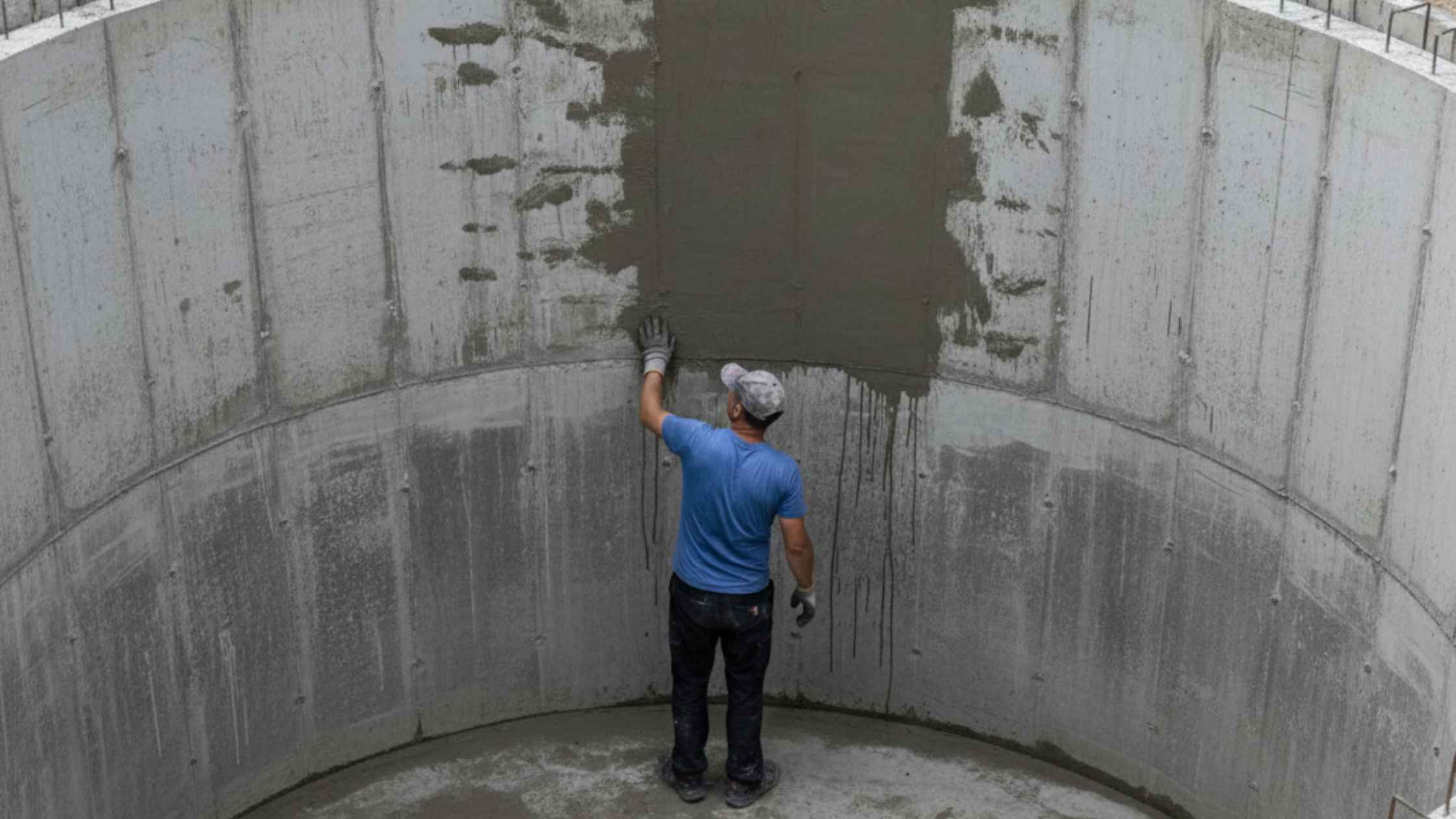
Contaminated drinking water from poorly waterproofed storage tanks creates health hazards and structural damage. Underground water tanks face constant hydrostatic pressure, soil chemicals, and moisture ingress that compromise both water quality and tank integrity.
Food-grade waterproofing systems designed specifically for potable water storage solve these challenges. Keep reading to discover which waterproofing solutions protect your drinking water while preventing structural deterioration.
Contents
- 1 Key Characteristics of Potable Water Tank Waterproofing Systems
- 2 Waterproofing Solution Categories for Underground Water Tanks
- 3 Application Strategy for Complete Protection
- 4 Sunanda Global’s Potable Water Tank Waterproofing Solutions
- 5 Partner with Sunanda Global
- 6 FAQs
- 7 Q1. Why is specialized waterproofing needed for potable water underground tanks?
- 8 Q2. What are the main types of waterproofing for underground water tanks?
- 9 Q3. What certifications should I look for in potable water tank waterproofing?
- 10 Q4. Can you waterproof an existing leaking underground water tank?
- 11 Q5. Why is crack bridging important for tank waterproofing?

Key Characteristics of Potable Water Tank Waterproofing Systems
Non-Toxic and Food-Grade Certification
Materials must be tested and certified as suitable for contact with potable water. Chemical stability ensures no leaching occurs even after years of continuous water contact. The waterproofing system should maintain its protective properties without degrading water quality.
Positive and Negative Hydrostatic Pressure Resistance
Underground water tank waterproofing must handle pressure from both directions. Positive pressure occurs when the tank is full, pushing water outward against walls. Negative pressure comes from external groundwater trying to seep inward through concrete.
Crack Bridging and Flexibility
Concrete movement from thermal expansion and structural settlement creates cracks. Effective waterproofing systems bridge these cracks or seal them through internal chemical reactions. Flexibility prevents waterproofing failure as concrete expands and contracts.
Adhesion to Damp Substrates
Underground construction often involves damp conditions. Waterproofing materials must bond effectively to concrete with residual moisture. Systems requiring completely dry substrates create application delays and complications.
Long-Term Durability
Potable water tanks serve for decades. Waterproofing systems must maintain effectiveness throughout the tank’s service life without frequent maintenance or reapplication. Resistance to common water treatment chemicals, including residual chlorination, is important for long-term durability.
Waterproofing Solution Categories for Underground Water Tanks
Crystalline Waterproofing
Crystalline systems penetrate concrete pores through capillary action. They react with moisture and concrete compounds to form insoluble crystals. These crystals block water pathways while allowing concrete to breathe.
The technology offers self-healing properties. When new cracks form, incoming water reactivates the crystalline reaction, sealing the crack from within. This makes crystalline waterproofing ideal for the negative side of underground tanks.
Cementitious Waterproofing
Cementitious compounds create a rigid, waterproof barrier on concrete surfaces. Modified with polymers, these systems improve flexibility and adhesion. They apply easily to damp substrates and cure quickly.
Food-grade cementitious waterproofing suits potable water applications when formulated without harmful additives. It requires proper surface preparation and crack treatment before application.
Polymer-Modified Waterproofing
Polymer modifications improve traditional cementitious systems. Acrylic or latex polymers increase flexibility, crack-bridging capability, and adhesion. These systems balance rigid protection with movement accommodation.
Water-based polymer systems offer low VOC emissions and safe application in enclosed tank spaces. They provide excellent bonding to both new and existing concrete surfaces.
Epoxy-Based Waterproofing
Epoxy coatings create impermeable barriers with excellent chemical resistance. Food-grade epoxy formulations designed for contact with potable water provide superior protection in harsh soil conditions.
High-build epoxy systems fill surface irregularities while creating smooth, cleanable interior finishes. The chemical resistance protects against chlorine and other water treatment chemicals.
Application Strategy for Complete Protection
- External Waterproofing: Applied to exterior, positive side, before backfilling. It stops groundwater at the source and is often paired with drainage systems.
- Internal Waterproofing: Food-grade coatings applied inside to protect water quality and provide a direct barrier. Allows for easier inspection and maintenance.
- Comprehensive Approach: The most effective strategy uses both systems together. External handles groundwater pressure, while internal safeguards water quality and acts as a secondary seal.
- Critical Detail: Special focus must be given to sealing joints, seams, and penetrations, as they are common failure points.
Sunanda Global’s Potable Water Tank Waterproofing Solutions
Sunanda Global offers specialized waterproofing systems certified for drinking water storage applications.
SUNCRYSTALMIX
This crystalline waterproofing admixture integrates into concrete during mixing. The technology creates a long-term waterproof barrier throughout the concrete matrix.
Key Benefits: Non-toxic formulation safe for potable water. Reduces concrete permeability while maintaining breathability. Suitable for new construction and repair applications.
Applications: Underground water tanks, swimming pools, basements, and water-retaining structures requiring internal waterproofing.
POLYALK WP
POLYALK WP is a two-component, polymer-modified waterproofing system. The acrylic polymer modification provides flexibility and superior adhesion.
Key Benefits: Food-grade formulation for potable water contact. Excellent adhesion with high flexural strength.
Applications: Internal and external surfaces of water tanks, reservoirs, and water treatment facilities.
SUNKOTE WP+
This single-component, flexible elastomeric coating offers ease of application with reliable performance. The polymer-modified formula balances protection with application simplicity.
Key Benefits: Flexible enough to accommodate minor structural movement. Safe for drinking water storage. Weather-resistant for external applications.
Applications: Overhead tanks, underground tanks, bathrooms, and wet areas requiring flexible waterproofing.
SUNEPOXY HB
SUNEPOXY HB is a solvent-free, high-build epoxy coating designed for demanding waterproofing applications. The food-grade formulation ensures safety for potable water contact.
Key Benefits: Impermeable barrier with excellent chemical resistance. High-build application fills surface imperfections. Smooth, cleanable finish for tank interiors. Long service life with minimal maintenance.
Applications: Potable water tanks, sewage treatment plants, chemical storage, and industrial flooring requiring chemical-resistant protection.
Selecting the right system for your project depends on construction stage, site conditions, and performance requirements.
Partner with Sunanda Global
Proper system selection and application technique determine waterproofing success. Working with experienced professionals ensures compliance with drinking water standards and long-term structural protection.
Sunanda Global brings 45+ years of expertise as the best waterproofing company in India. Our ISO 9001:2015-certified, R&D-driven products serve diverse applications from residential buildings to large-scale infrastructure. We maintain a network of trained waterproofing contractors in Lucknow and across India, ensuring proper installation and performance.
Contact Sunanda Global today for expert consultation on waterproofing your underground water tank with food-grade, certified solutions.
FAQs
Q1. Why is specialized waterproofing needed for potable water underground tanks?
Underground tanks storing drinking water require food-grade, non-toxic waterproofing materials that won’t leach chemicals. They must also withstand constant hydrostatic pressure, soil chemicals, and protect the structure while maintaining water quality.
Q2. What are the main types of waterproofing for underground water tanks?
The primary solutions are Crystalline Waterproofing, Polymer-Modified Cementitious Coatings, and Epoxy-Based Coatings. Selection depends on project stage, conditions, and budget.
Q3. What certifications should I look for in potable water tank waterproofing?
Always look for products certified as food-grade and safe for prolonged contact with drinking water. They should comply with local and international potable water safety regulations to ensure no alteration to water taste, odor, or composition.
Q4. Can you waterproof an existing leaking underground water tank?
Yes. Existing tanks require internal coating systems like polymer-modified cementitious or epoxy coatings after proper surface preparation. Crystalline slurries can also be applied to reactivate sealing from the inside.
Q5. Why is crack bridging important for tank waterproofing?
Concrete expands, contracts, and settles, causing cracks. A waterproofing system with excellent crack-bridging ability flexes to span these cracks without tearing, maintaining a continuous, watertight seal and preventing leaks.