

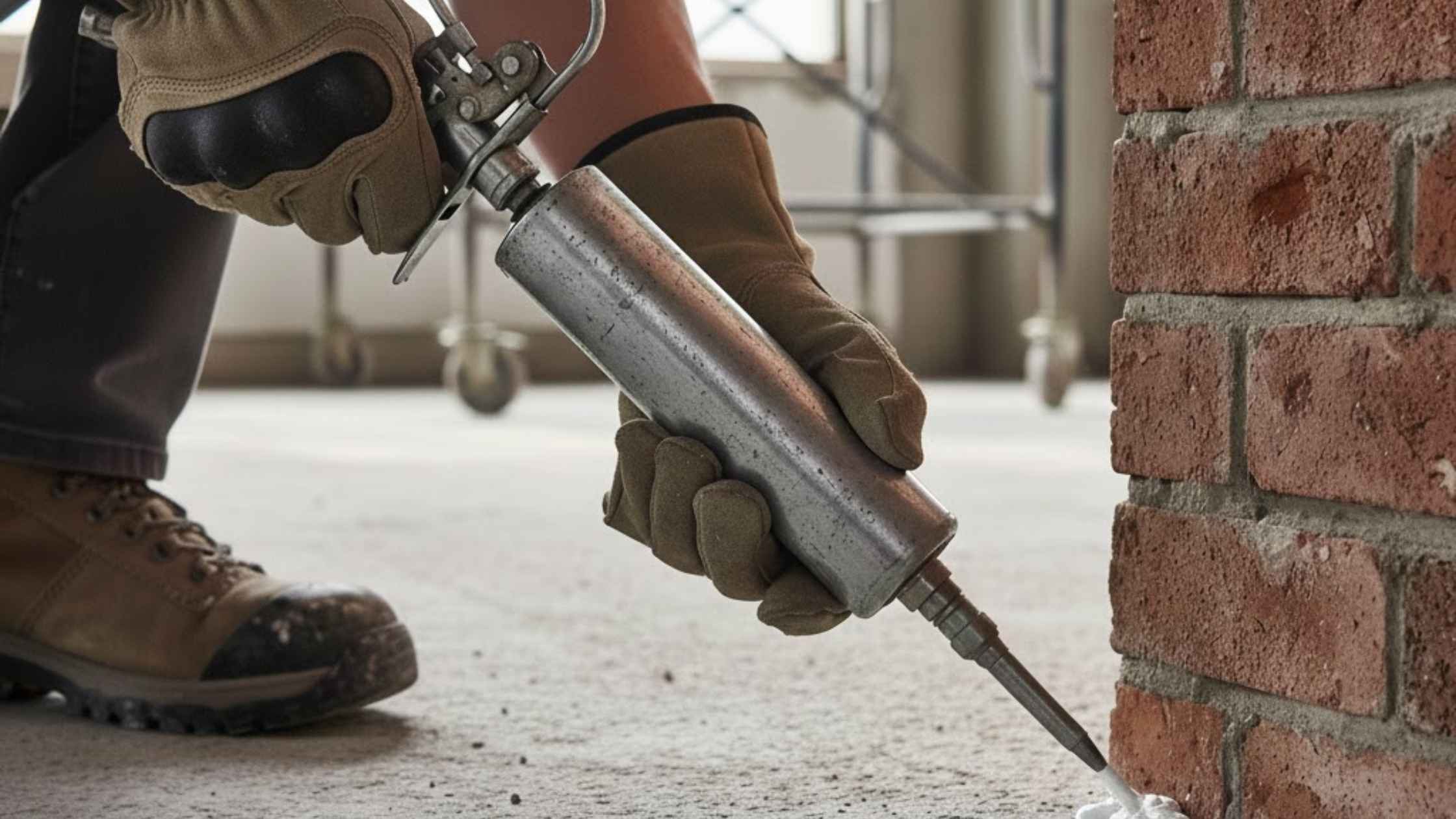
PU sealant, or polyurethane sealant, is an elastomeric material that cures to form flexible, durable seals in joints and gaps. Unlike rigid sealants that crack under movement, PU sealants accommodate structural expansion and contraction while maintaining continuous protection.
The chemistry behind PU sealants involves polyurethane polymers that create strong molecular bonds. These bonds provide exceptional adhesion to a wide range of substrates, including concrete, metal, wood, glass, and plastics, while retaining flexibility throughout the material’s service life.
Modern polyurethane sealant technology addresses the fundamental challenge in construction: structural movement. Temperature changes cause expansion and contraction. Settlements create shifts. Wind loads generate stress. Effective sealing requires materials that move with structures rather than resist movement.
Contents
- 1 What are the Types of PU Sealants?
- 2 What are the Key Properties That Define Performance?
- 3 What are the Primary Application Areas in building projects?
- 4 What are the Advantages of PU Sealants?
- 5 Application Best Practices
- 6 Choose Sunanda Global’s High-Performance PU Sealant Solution
- 7 Why Sunanda Global is Your Trusted Partner for PU Sealants
- 8 FAQs
- 9 Q1. What is a PU sealant?
- 10 Q2. How is PU sealant better than silicone?
- 11 Q3. Where is PU sealant commonly used?
- 12 Q4. Is PU sealant good for waterproofing?
- 13 Q5. What is SUNSEAL PU?

What are the Types of PU Sealants?
PU sealants fall into two primary categories based on curing mechanism:
Single-Component PU Sealants:
The single-component sealants cure through atmospheric moisture exposure. These products come ready to apply directly from cartridges or containers. Moisture in the air triggers the curing reaction, gradually transforming the material from paste to an elastic solid. Single-component systems can be easily applied and offer consistent performance for standard sealing requirements.
Two-Component PU Sealants:
These cure through a chemical reaction between resin and hardener components. Mixed in specific ratios, these systems cure independently of atmospheric conditions. Two-component formulations provide faster curing, predictable timelines, and enhanced performance characteristics for demanding applications.
What are the Key Properties That Define Performance?
Several characteristics distinguish PU sealants from alternative sealing materials:
- Exceptional Flexibility: PU sealants allow accommodation of joint movement, which surpasses traditional sealants significantly, preventing seal failure from structural dynamics.
- Superior Adhesion: It creates strong bonds, often without primers, on many substrates, ensuring long-term seal integrity.
- Weather Resistance: They can maintain performance through UV exposure, temperature extremes, and moisture contact. PU sealants provide consistent protection across climatic conditions.
- Chemical Resistance: Resistance to oils, fuels, mild acids, and alkalis makes PU sealants suitable where chemical exposure would degrade alternative materials.
- Paintability: Unlike silicone sealants that reject paint, cured polyurethane accepts most coating systems, allowing aesthetic integration with surrounding surfaces.
What are the Primary Application Areas in building projects?
PU sealants serve diverse applications across multiple industries:
- Construction Joint Sealing: Expansion joints in concrete structures, facade connections, and perimeter seals benefit from PU sealant’s movement accommodation and weather resistance.
- Roofing Applications: Sheet metal roof joints, skylight perimeters, and roof penetrations require durable, weather-resistant seals. PU sealants withstand UV exposure and temperature extremes while maintaining flexibility.
- Plaza Deck and Balcony Joints: Occupied spaces over conditioned areas require watertight seals that accommodate movement without compromising the waterproofing membrane below.
- Curtain Wall Systems: Modern facades require sealants that accommodate significant movement while maintaining weatherproofing. PU sealants provide the necessary flexibility and adhesion for these dynamic applications.
- Concrete Expansion Joints: Parking structures, building slabs, and precast concrete panels require sealants that handle continuous movement. PU sealants prevent water ingress while accommodating expansion and contraction cycles.
What are the Advantages of PU Sealants?
Several advantages make PU sealants the preferred choice for critical sealing applications:
- Long Service Life: PU sealants reduce maintenance frequency and lifecycle costs. When properly applied, polyurethane sealants provide at least 10 years of reliable performance, minimizing reapplication expenses and building disruption.
- All-Weather Application: PU sealants can be installed across broader temperature ranges than alternative sealants. While optimal conditions improve results, PU sealants can be applied in less-than-ideal weather when project schedules demand progress.
- Substrate Versatility: Single products seal connections between dissimilar materials from metal to concrete and wood to glass, simplifying procurement and application procedures.
- Mechanical Strength: Unlike softer sealants that tear or deform, cured polyurethane provides durability in high-traffic or high-stress locations.
Application Best Practices
Successful PU sealant application requires attention to preparation and technique:
Surface Preparation
Surfaces must be clean, dry, and structurally sound. Remove dust, oil, old sealant, and loose material. Concrete surfaces may require primer application for optimal adhesion on porous substrates.
Joint Design
Proper width-to-depth ratios prevent excessive strain, which significantly affects sealant performance. Backer rod installation creates proper joint geometry and prevents three-sided adhesion that restricts movement accommodation.
Application Temperature
The temperature when applying influences curing and performance. Most PU sealants perform optimally between 4°C and 50°C, depending on product specification. Extreme temperatures affect working time, curing rate, and initial adhesion development.
Tooling and Finishing
Proper tooling creates concave joint profiles that optimize stress distribution during movement. Tooling should occur within working time before surface skin formation. This impacts both appearance and performance.
Choose Sunanda Global’s High-Performance PU Sealant Solution
Sunanda Global’s single-component Polyurethane Joint Sealant, SUNSEAL PU, is a one-part system for dynamic cracks, window frames, and roofing sheet joints. No mixing required, and it cures with moisture. It is a self-levelling formula that bonds strongly to most building materials.
SUNSEAL PU provides reliable performance across standard construction and industrial sealing requirements, offering the flexibility, adhesion, and durability that characterize quality polyurethane sealants.
Why Sunanda Global is Your Trusted Partner for PU Sealants
With over 45 years of experience in Indian industrial construction, Sunanda Global leads in innovation in construction chemical coatings. We invest 5% of annual revenue in R&D, focusing 60% of our efforts on LEED-compliant and eco-friendly products. We also hold ISO 9001:2015 certification.
As the best waterproofing company in India, our low-VOC, environmentally conscious water leakage solutions deliver top performance. Moreover, Sunanda Global provides full support: from technical advice to vetted partners. With us, you can expect reliable on-site execution through trusted waterproofing contractors in Bangalore, Chennai, Hyderabad, Mumbai, and other major cities.
Contact Sunanda Global for PU sealant solutions that combine scientific innovation, proven durability, and reliable performance backed by decades of expertise.
FAQs
Q1. What is a PU sealant?
PU sealant is a flexible, polyurethane-based material that cures to form durable, waterproof seals in joints and gaps, accommodating structural movement.
Q2. How is PU sealant better than silicone?
PU sealant offers superior paintability, stronger adhesion to many substrates, and better resistance to abrasion and chemicals, making it ideal for demanding construction and industrial joints.
Q3. Where is PU sealant commonly used?
It is widely used for sealing expansion joints in concrete, automotive panel bonding, marine applications, industrial equipment, and as a reliable solution from professional waterproofing contractors.
Q4. Is PU sealant good for waterproofing?
Yes, its exceptional flexibility and strong adhesion make PU sealant an excellent choice for permanent, waterproof seals in dynamic joints, a specialty of a leading waterproofing company.
Q5. What is SUNSEAL PU?
SUNSEAL PU is Sunanda Global’s high-performance, single-component polyurethane sealant, offering strong adhesion and flexibility for dynamic cracks and joints, applied by certified waterproofing contractors in Bangalore and across India.