

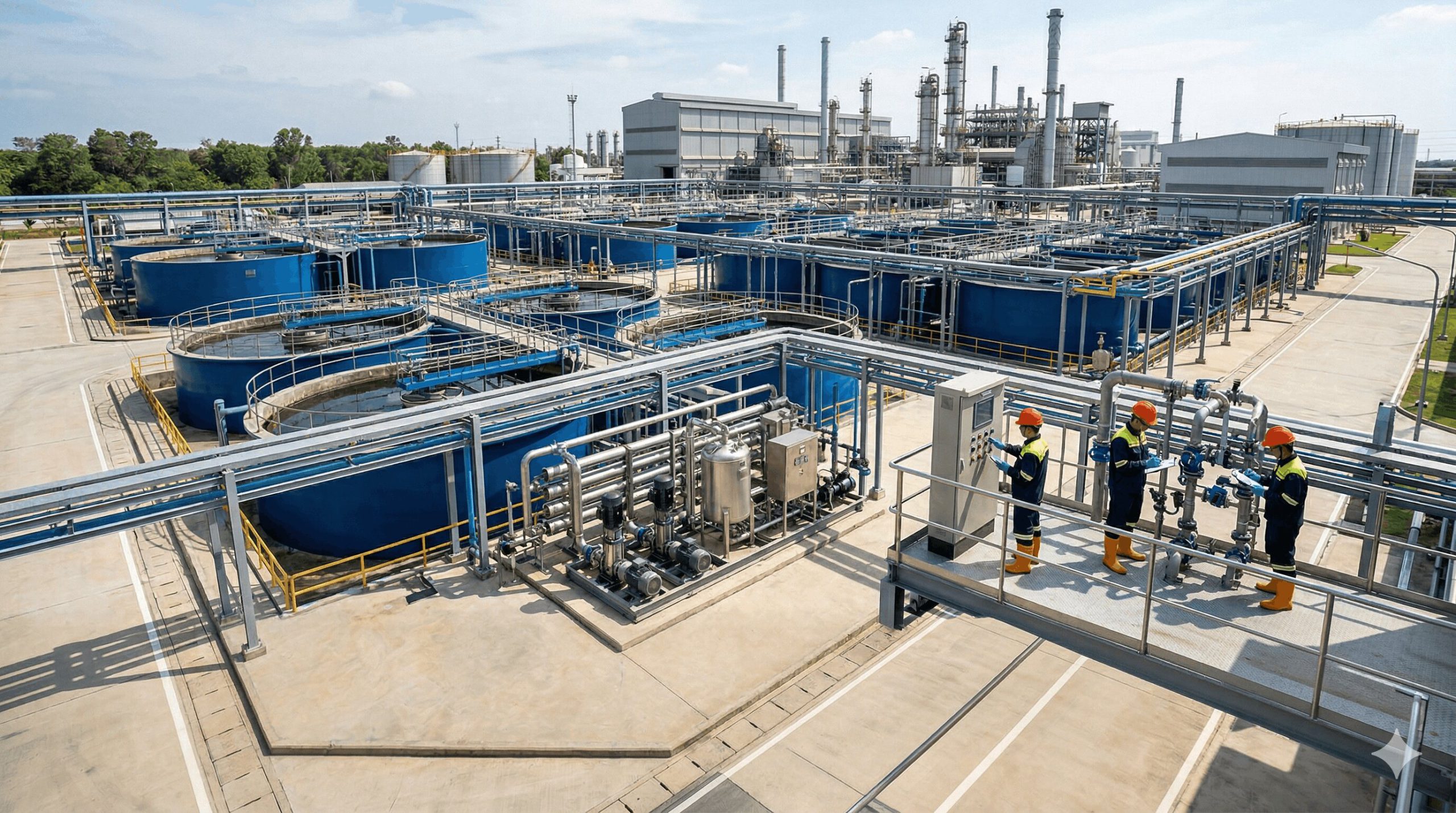
Environmental violations from effluent treatment plant failures can cost pharmaceutical and chemical companies a lot in penalties and product shutdowns. Yet many facilities overlook a critical vulnerability, the protective wastewater infrastructure coating within their structure that prevents structural deterioration and discharge contamination.
Effluent treatment plants (ETPs) handle some of the most aggressive chemical mixtures in industrial operations. Process effluents contain acids, alkalis, solvents, and reactive compounds that attack unprotected concrete and steel over time.
This blog explores industrial ETP coating systems, which are non-toxic, chemically resistant, durable, and prevent environmental compliance issues.
Contents
- 1 Understanding the Harsh Environment of Industrial ETPs
- 2 Chemical Resistance: What Coatings Must Handle
- 3 Application in Validated Areas and Quality Documentation
- 4 Long-Term Performance and Maintenance Planning
- 5 Sunanda Global’s Industrial ETP Coating Solutions
- 6 Why Choose Sunanda Global for ETP Protection?
- 7 FAQs

Understanding the Harsh Environment of Industrial ETPs
Effluent treatment plants in pharmaceutical and chemical facilities face unique challenges that demand specialized protective coatings.
Complex Chemical Exposure
Unlike sewage treatment handling relatively consistent waste streams, industrial ETPs process variable effluents from multiple product processes. A single pharmaceutical facility might discharge strong acids and alkalis from synthesis reactions, organic solvents from extraction and purification, oxidising agents from cleaning and sanitisation, and active pharmaceutical ingredients.
Temperature Extremes
Process effluents often discharge at elevated temperatures before cooling in equalization tanks. Thermal cycling from batch discharges stresses coating adhesion and chemical resistance, while some neutralization reactions generate additional heat
Abrasion and Mechanical Stress
Grit. suspended solids, and precipitated materials create continuous abrasion on tank floors and channel walls. Mixing equipment, aerators, and maintenance activities add mechanical stress that coatings must accommodate without failure.
Regulatory Scrutiny
Pharmaceutical and chemical plants operate under strict environmental regulations. Coating failures can lead to groundwater contamination from tank leakage, treatment process contamination, discharge violations, and regulatory citations during environmental audits.
Chemical Resistance: What Coatings Must Handle
Wastewater infrastructure coating needs to handle the facility’s specific chemical challenges and not just generic industrial exposure, making epoxy-based protective coatings a preferred solution in such environments.
Extreme pH Levels
Pharmaceutical and chemical manufacturing can generate highly acidic or alkaline wastewater. Coatings used in neutralisation tanks must resist acids such as hydrochloric, sulphuric, and nitric acid as well as alkalis like sodium and potassium hydroxide, including rapid pH fluctuations during batch discharges.
Solvent Exposure
Wastewater may contain solvents such as alcohols, acetone, toluene, and chlorinated compounds. These chemicals can degrade unsuitable coatings, making solvent-resistant formulations essential.
Oxidizing Chemicals
Treatment processes often involve oxidising agents such as chlorine, hydrogen peroxide, or ozone. Coatings must be specifically formulated to withstand these chemicals without rapid degradation.
Facility-Specific Compounds
Industrial effluents may also contain surfactants, chelating agents, reactive intermediates, or biocides. Selecting the correct coating requires analysing the facility’s actual wastewater composition.
Application in Validated Areas and Quality Documentation
Many industrial ETPs sit adjacent to pharmaceutical manufacturing areas, creating unique application and documentation requirements.
Protecting Adjacent Areas
When ETP infrastructure connects to validated manufacturing spaces, coating work must avoid generating particles, odours, or fumes that could affect product quality. Temporary containment, air filtration, and careful scheduling during shutdown periods may be required.
Meeting Validation Requirements
Pharmaceutical facilities require documented validation of materials and installation. This typically includes verifying coating suitability, confirming correct application, and monitoring long-term performance.
Quality Control and Records
Coating projects in pharmaceutical environments require detailed records, including approved materials, application procedures, inspection reports, and traceability of materials used. Proper documentation ensures regulatory compliance and audit readiness.
Long-Term Performance and Maintenance Planning
Proper coating maintenance extends infrastructure life while preventing compliance issues and costly emergency repairs.
Preventing Structural Problems
Without protective coatings, ETP structures can deteriorate through acid attack on concrete, corrosion of steel reinforcement, and cracking or leakage that may contaminate groundwater and disrupt plant operations.
Maintaining Treatment Effectiveness
Damaged coatings can affect treatment performance by creating rough surfaces that trap solids, encourage unwanted microbial growth, and interfere with mixing or chemical reactions.
Inspection and Repair Protocols
Regular inspections help detect early signs of damage. Minor defects can often be repaired with compatible materials, while severe deterioration may require recoating.
Application Best Practices
- Test for moisture and profile the surface for good bonding
- Existing structures need thorough cleaning, failed coating removal, concrete repairs, and contaminant elimination
- Control temperature and humidity during application and curing
- Ensure adequate ventilation for worker safety
- Allow complete curing before chemical exposure
Sunanda Global’s Industrial ETP Coating Solutions
Sunanda Global’s wastewater infrastructure coating solutions are low-VOC formulations and can handle demanding chemical and pharmaceutical environments.
ELASTOROOF 2K
A flexible polyurethane coating for ETP tanks handling thermal cycling and chemical extremes. The flexibility accommodates temperature changes without cracking, while the chemical resistance handles acids, alkalis, solvents, and oxidizing agents.
Low-VOC formulation meets safety requirements for application in operating facilities. Works for both indoor and outdoor ETP structures exposed to weather.
SUNEPOXY TF30
A three-component chemical and abrasion-resistant solution. It is easily applied, is solvent-free, and low in VOCs, which makes it environmentally friendly. It has proven performance across a wide range of aggressive industrial environments.
SUNEPOXY HB
A high-build epoxy combining chemical resistance with mechanical durability. Handles both the chemical attack and physical wear that your ETP experiences.
It achieves protective thickness rapidly, reducing application time. Its superior abrasion resistance withstands grit, suspended solids, and equipment operation. Works well for repairs where the substrate isn’t completely dry.
Low-VOC formulation meets environmental and worker safety requirements.
Why Choose Sunanda Global for ETP Protection?
With over 45 years of experience in Indian industrial construction, Sunanda Global leads in innovation in construction chemical coatings. We invest 5% of annual revenue in R&D, focusing 60% of our efforts on LEED-compliant and eco-friendly products. We also hold ISO 9001:2015 certification.
As the best waterproofing company in India, our low-VOC, environmentally conscious water leakage solutions deliver top performance. Moreover, Sunanda Global provides full support: from technical advice to vetted partners. With us, you can expect reliable on-site execution through trusted waterproofing contractors in Delhi, Chennai, Hyderabad, Mumbai, Bangalore, and other major cities.
Contact Sunanda Global for wastewater infrastructure coating that combines scientific innovation, proven durability, and reliable performance backed by decades of expertise.
FAQs
Q1. How often should we inspect our ETP coatings?
Check visually every quarter to catch problems early. Do detailed inspections annually, including chemical resistance testing. Increase frequency if your effluents are particularly aggressive or regulations require more frequent checks.
Q2. Can we coat our ETP without shutting down production?
Yes, with planning. Coat tanks one at a time during scheduled maintenance while others keep operating. Complete facility coating needs a coordinated shutdown. Work with your coating contractor to minimise disruption.
Q3. How do we choose the right coating for our specific chemicals?
Analyse your effluent to identify chemicals, pH range, temperature, and solids. Test coating compatibility with your actual effluents, not just similar chemicals. Site visits help assess mechanical stresses. Match coating capabilities to real conditions.
Q4. What happens if our ETP coating fails?
Failed coatings allow structural deterioration, causing tank leaks and potential groundwater contamination. Treatment efficiency drops, affecting discharge quality. Coating particles contaminate treatment processes. Proper maintenance prevents these environmental violations and regulatory problems.