

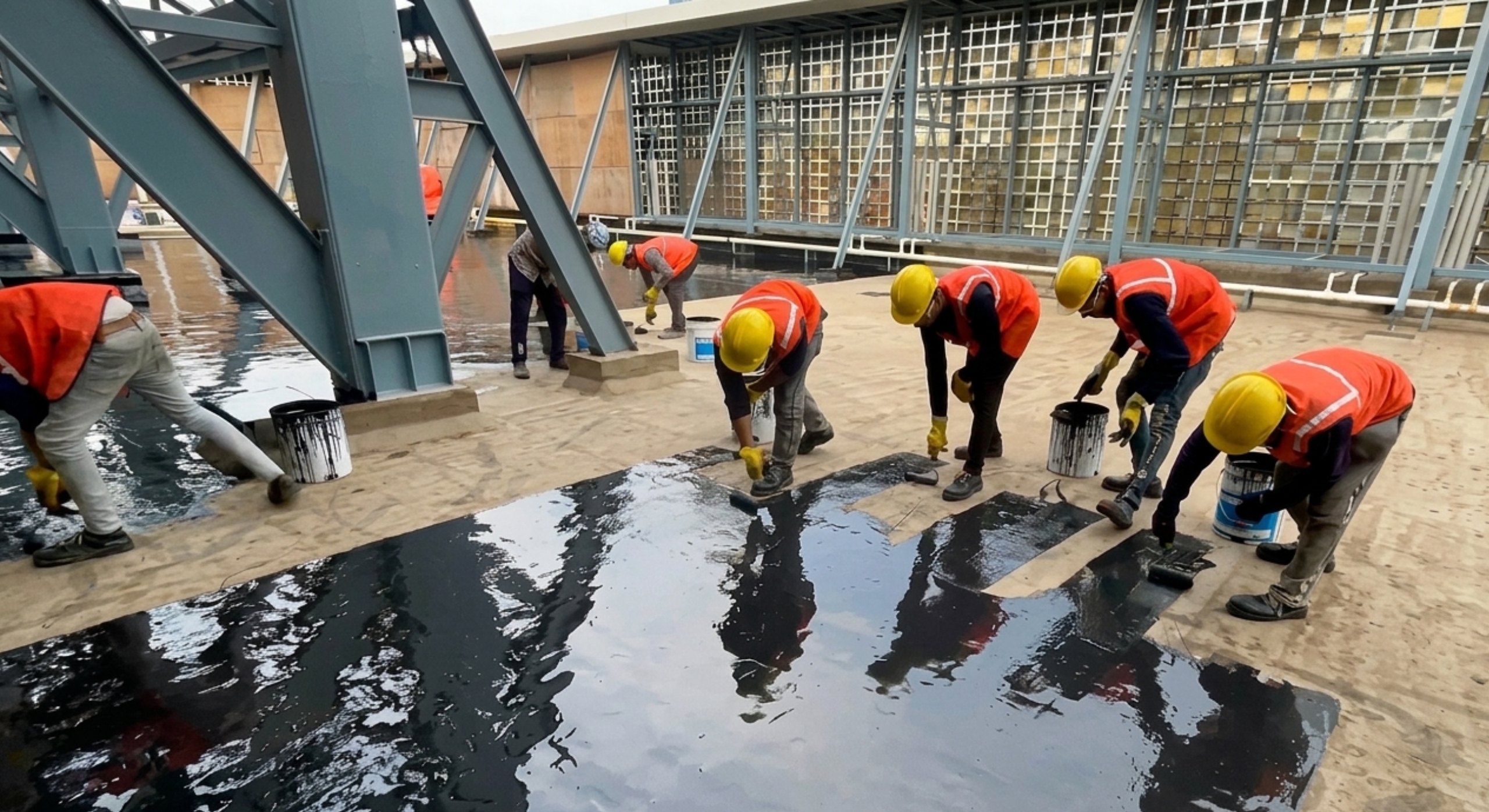
RCC slabs combine concrete and steel reinforcement to handle both compressive and tensile stresses. Concrete manages compression, steel handles tension. Despite that structural strength, RCC is not inherently waterproof. At the micro level, concrete is porous. Hairline cracks develop from shrinkage, thermal movement, and live loads. In Indian conditions, intense monsoon, UV exposure, and temperature swings accelerate that process. The most common roof leakage solution contractors reach for addresses the symptom, not the cause. Leaks start at cracks, joints, parapet junctions, drain edges, and pipe penetrations. Effective roof waterproofing requires a system, not just a product. These five best practices cover what that system needs to include.

1. Prepare the Surface Before Anything Else
Surface preparation determines whether the roof waterproofing system performs or delaminates. Remove all dust, foreign matter, loose material, and old failing coatings from the roof surface. Any contamination between the substrate and the waterproofing layer breaks adhesion. Once the surface is clean, pre-wet it thoroughly for one hour before applying any coating. A bond-ready surface is non-negotiable. A poorly prepared surface causes even a correctly specified waterproofing solution to fail.
2. Repair Cracks Before Applying Any Coating
Cracks and depressions in the slab must be filled before waterproofing begins. V-grooving opens hairline cracks so filler material can penetrate properly. Fill with cement-sand mortar, polymer modified grout, or for deeper cracks in older slabs, inject non-shrink grouting compound or epoxy. Applying a roof leakage solution over an unrepaired crack does not seal it. Movement in the substrate will reopen the crack through the coating layer.
3. Apply the Right Roof Waterproofing System
The right roof waterproofing system depends on the roof’s condition, expected movement, and how the surface will be used.
Waterproofing coatings act as impenetrable barriers on roof surfaces, preventing water passage, increasing the life span of the structure, and reducing maintenance costs. Polymer modified acrylic and bituminous waterproofing coatings are well suited to RCC roof slabs.
Where the roof needs a seamless, joint-free barrier with high flexibility, liquid applied waterproofing membranes are the better choice. Applied like paint or spray, they cure into highly flexible, monolithic membranes with very high elongation, accommodating thermal movement and minor cracking. Polyurethane, polyurea, and hybrid polyurea membranes address leakages across roof applications.
Whichever system is selected, the substrate must be sound, clean, and properly prepared, and the product applied strictly as per the manufacturer’s data sheet.
4. Detail Every Junction and Penetration
Junctions and penetrations are where roof leakage starts most often. Two details are critical.
At the parapet wall and roof junction, provide a fillet of adequate size along the full length of the junction. The fillet must be angular or concave, not convex. Extend the waterproofing solution from the roof up the parapet wall to a minimum height of 300 mm, terminated into a chase cut in the wall.
At pipe penetrations and vents, seal around each opening with a compatible flexible sealant. No waterproofing chemistry compensates for a poorly executed junction detail.
5. Protect the Membrane and Maintain It
The screed concrete laid over the roof waterproofing coating protects it from foot traffic, UV exposure, and physical damage during construction and service. Without this protective layer, the coating is vulnerable from day one.
Waterproofing is not a permanent, maintenance-free solution. Annual inspection before monsoon season identifies early signs of cracking, blistering, or loss of coverage. Clear drains and gutters of debris before the rains. Address distress at the first sign rather than waiting for active leaks. Early remediation costs a fraction of full system replacement.
Partner with Sunanda Global
Sunanda Global has worked across construction chemicals in India for over 45 years, covering waterproofing solutions, coatings, flooring, and concrete modification. System compatibility gets addressed at the specification stage, not during execution.
5% of annual revenue goes into R&D, with 60% of that directed at LEED-compliant and eco-friendly products. Every system is developed and supplied under ISO 9001:2015 certified processes.
As a construction chemical manufacturer in India, Sunanda Global develops roof waterproofing and coating systems that account for Indian site conditions: high moisture, temperature swings, and chemically aggressive environments.
Contact the Sunanda Global team for product selection, technical support, substrate evaluation, and application detailing.
Frequently Asked Questions
Q1. At what slope should screed concrete be laid over a waterproofed RCC roof?
Screed concrete over a waterproofed RCC roof should be laid at a minimum slope of 1 in 100, or as specified in the structural drawing, to ensure proper drainage and prevent water ponding.
Q2. Why is fibre glass cloth used between the two coats of polymer modified cementitious slurry?
Fibre glass cloth sandwiched between the two coats adds flexibility and crack-bridging capacity to the roof waterproofing system, improving its ability to accommodate minor substrate movement without cracking.
Q3. What is the right roof leakage solution for an old RCC roof?
Polymer modified cementitious waterproofing works on both new and old RCC roofs, provided the surface is properly prepared, all cracks are repaired, and the substrate is clean and pre-wetted before application.