

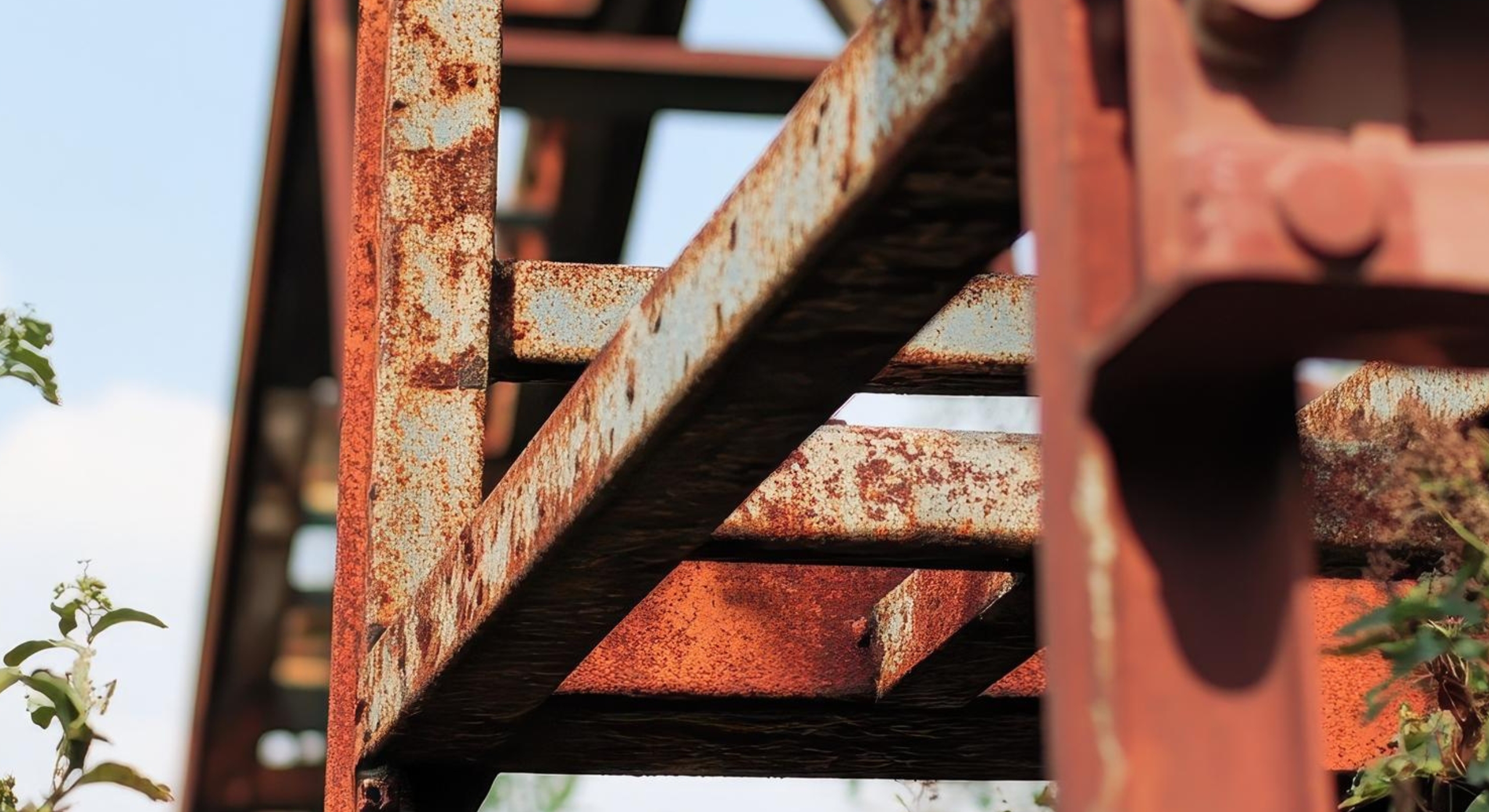
Rust is an active corrosion process that continues consuming steel as long as moisture and oxygen reach the surface. Treating rusted steel correctly before applying a coating determines whether the coating system lasts for years or fails within a short time.

Why Rust Treatment Matters
A coating applied over untreated rust traps moisture and oxygen against the steel, and the corrosion reaction continues underneath the coating film. This causes blistering, cracking, and early failure. Treating rust properly before coating protects the investment in both material and labor.
Step 1: Clean the Surface
Cleaning removes oil, grease, and dirt from the steel before rust treatment begins. Solvent cleaning handles organic residues, degreasing targets heavier oil and grease buildup, and abrasive cleaning works on stubborn dirt and light surface deposits. The method used depends on the condition of the steel and the type of contamination present.
Step 2: Remove Rust and Corrosion
Sandblasting uses high pressure abrasive material to strip rust and scale from the steel and is the standard method for larger structural areas. On the contrary, mechanical grinding works well on smaller sections. A steel rust remover chemical treats corrosion in pits, seams, and tight areas where blasting or grinding might not work, dissolving what remains and preparing the surface for the next stage. The manufacturer dwell time and rinsing instructions keep the treated surface ready for coating.
Step 3: Profile the Surface
Surface profiling roughens the cleaned, rust-free steel, so the coating has a surface to grip. Abrasive blasting creates this profile for most structural applications, while chemical etching serves as an alternative for select projects. Profile depth should match the range for the coating that the manufacturer has specified, confirmed with a profile gauge rather than just a visual inspection. Because the right profile depth supports strong, lasting adhesion.
Step 4: Apply Primer
Primer forms the first line of defense against corrosion after the coating itself. Epoxy primers offer strong adhesion and corrosion resistance for general use while zinc-rich primers suit steel exposed to aggressive corrosive environments, since the zinc protects the steel even if the coating is later damaged. On the other hand, Polyurethane primers add flexibility and UV resistance for exposed applications.
Choosing the right anti-corrosion chemicals for the primer stage depends on the exposure conditions the steel will face in service.
Step 5: Final Inspection
A final check before coating confirms the surface is clean, the rust has been fully removed, and the profile matches the specifications. Correcting any gaps at this stage costs far less than reworking a failed coating later. This step protects the time and material invested in every earlier stage.
Best Practices for Long-Term Corrosion Protection
A few practices improve results across every step. Match preparation methods to the coating manufacturer’s stated requirements rather than a general standard. Track ambient temperature and humidity throughout preparation and coating, since high humidity speeds up flash rusting on freshly prepared steel. Apply primer as soon as possible after preparation, since freshly cleaned steel begins to oxidize again quickly. These practices extend the service life of the finished coating system.
Partner with Sunanda Global
Sunanda Global brings over 45 years of experience in construction chemicals, covering protective coatings, waterproofing, and concrete repair for industrial and infrastructure projects.
Our coating systems are built for steel exposed to demanding corrosive environments. Technical guidance is available from system selection through on-site application support.
Contact us to discuss the right rust treatment and coating system for your project.
Frequently Asked Questions
Q.1. Can a coating be applied directly over rusted steel?
Coating over untreated rust traps active corrosion under the coating film, which leads to blistering and early failure.
Q.2. What is a steel rust remover chemical?
A steel rust remover chemical dissolves or converts residual rust in pits and seams that mechanical cleaning cannot fully reach.
Q.3. What are anti-corrosion chemicals?
Anti-corrosion chemicals are the primers, such as epoxy and zinc rich formulations, used to protect steel from corrosion after cleaning and coating.
Q.4. What is the difference between mechanical and chemical rust removal?
Mechanical methods, like blasting and grinding, strip rust and scale by physical force, while a steel rust remover chemical treats residual corrosion in pits, seams, and areas mechanical methods miss.
Q.5. How do I know if the surface profile is correct?
A profile gauge measures depth against the range set by the coating manufacturer, giving accurate reading beyond visual inspection.
Q.6. Why does humidity matter during preparation?
High humidity speeds up flash rusting on freshly prepared steel before primer goes on, affecting the surface just prepared.