

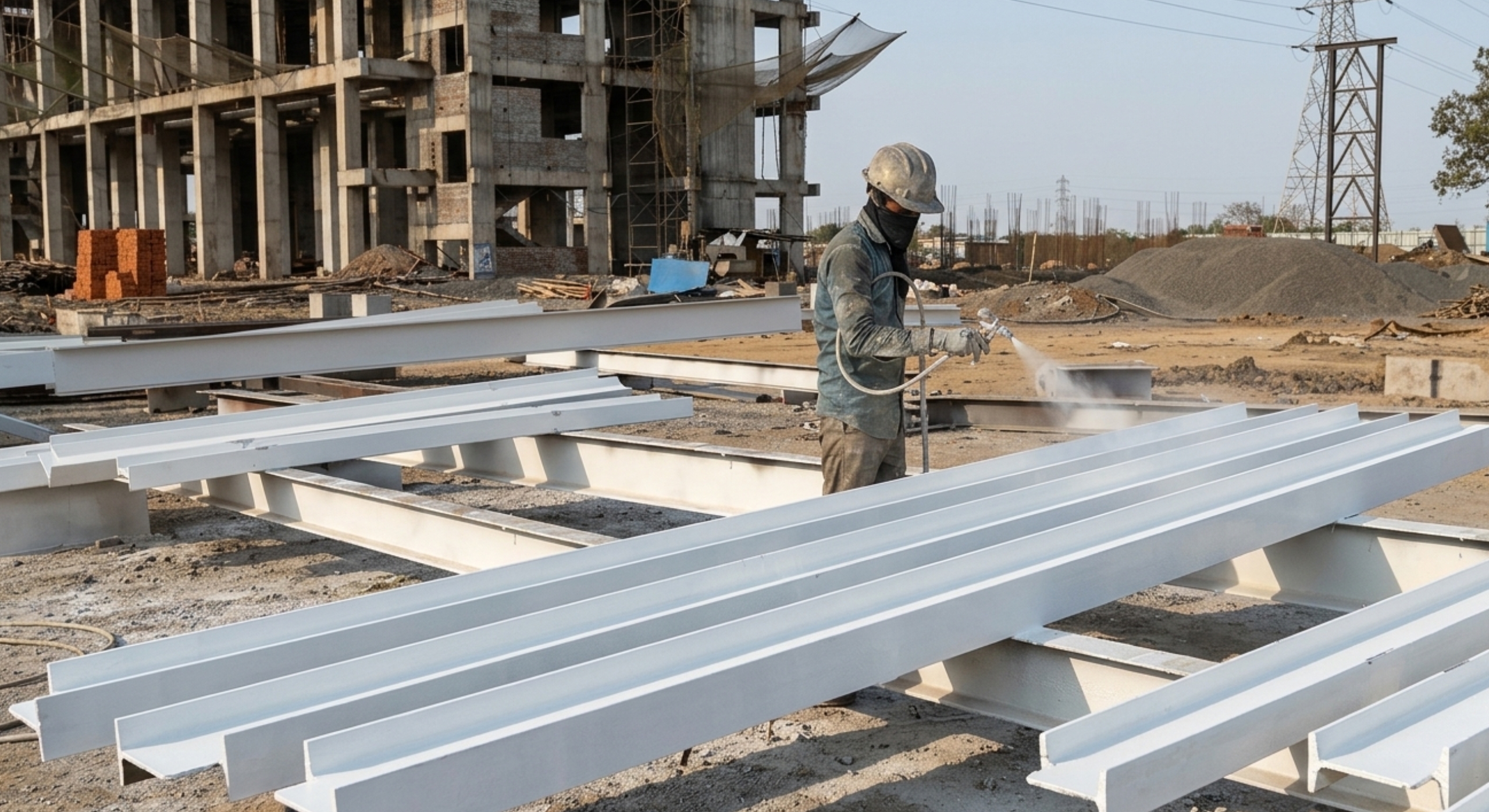
Structural steel gives buildings their load-bearing capacity. But steel has a critical vulnerability: it begins to lose mechanical strength when temperatures exceed 500°C. In a fire, that threshold can be reached within minutes. Passive fire protection addresses this by slowing heat transfer to the steel and allowing occupants to evacuate safely.
Intumescent coatings are one of the most effective and practical solutions available for this purpose. They apply like standard paint, comply with low VOC requirements, and deliver verified fire resistance ratings when correctly specified and applied.

How Intumescent Coatings Work
Heat between 250°C and 350°C triggers a reaction between three components in the coating: the carbon donor, the acid donor, and the blowing agent. They react to form a phosphate ester char that expands and builds into a thick insulating foam over the steel surface.
That char layer does the actual protecting. It slows heat transfer to the steel and extends the time before structural integrity is at risk. At ambient temperatures the coating stays stable, which is exactly what makes it reliable in normal service conditions.
What Makes Water-Based Formulations Effective
Water-based systems produce less odor than solvent-based products and carry lower health risks during application. They meet indoor air quality standards and work well for interior use. Exterior applications generally call for a compatible protective topcoat over the cured intumescent layer. They are usually specified for fire resistance against celluslosic fires.
Key Performance Parameters
Dry film thickness: Ranges upto several millimeters depending on the steel section size and fire resistance duration required. Manufacturers specify this based on product specific test data.
Fire resistance: Ratings follow standard classifications of 30, 60, 90, and 120 minutes. Building use, occupancy type, and local codes determine which rating applies to a given project.
Moisture sensitivity: The coating needs to stay dry during initial cure. Rain, condensation, or high humidity at this stage causes blistering and delamination, both of which affect long term performance.
Sunanda Global’s Water-Based Intumescent Coating Solution
SUNNOFLAME IP is a water-based intumescent coating for passive fire protection of structural steel. Under heat exposure, it produces a thick cellular char blanket that cuts heat penetration, limits flame spread and reduces smoke generation.
Key properties
- Water-based with low VOC content
- Fire retarding coating with a durable smooth architectural finish
- Applies like regular paint with quick cleanup
- Suited for steel beams, columns, and other structural elements across commercial, industrial, and infrastructure projects
Partner with Sunanda Global
Sunanda Global has been working across construction chemicals in India for over 45 years. The product range covers waterproofing, coatings, flooring, and concrete modification, which means system compatibility gets sorted at the specification stage rather than becoming a problem during execution.
Sunanda Global supplies low-VOC fire protection and coating systems built for local site conditions.
Reach out to the Sunanda Global team for technical support.
Frequently Asked Questions
Q1. What substrates is SUNNOFLAME IP compatible with?
SUNNOFLAME IP is suitable for structural steel members like beams and columns in commercial, industrial, and infrastructure applications where fire protection in the event of celluosic fire is required.
Q2. Who determines the coating thickness for a project?
The thickness is determined by the manufacturer, based on steel section size, fire rating required, and the test data of the product. Consult with the technical team during specifications.
Q3. What makes water-based intumescent coatings a preferred choice?
They are preferred because of their lower VOC content, lower odor during application, easier cleanup, and meeting current environmental standards.