

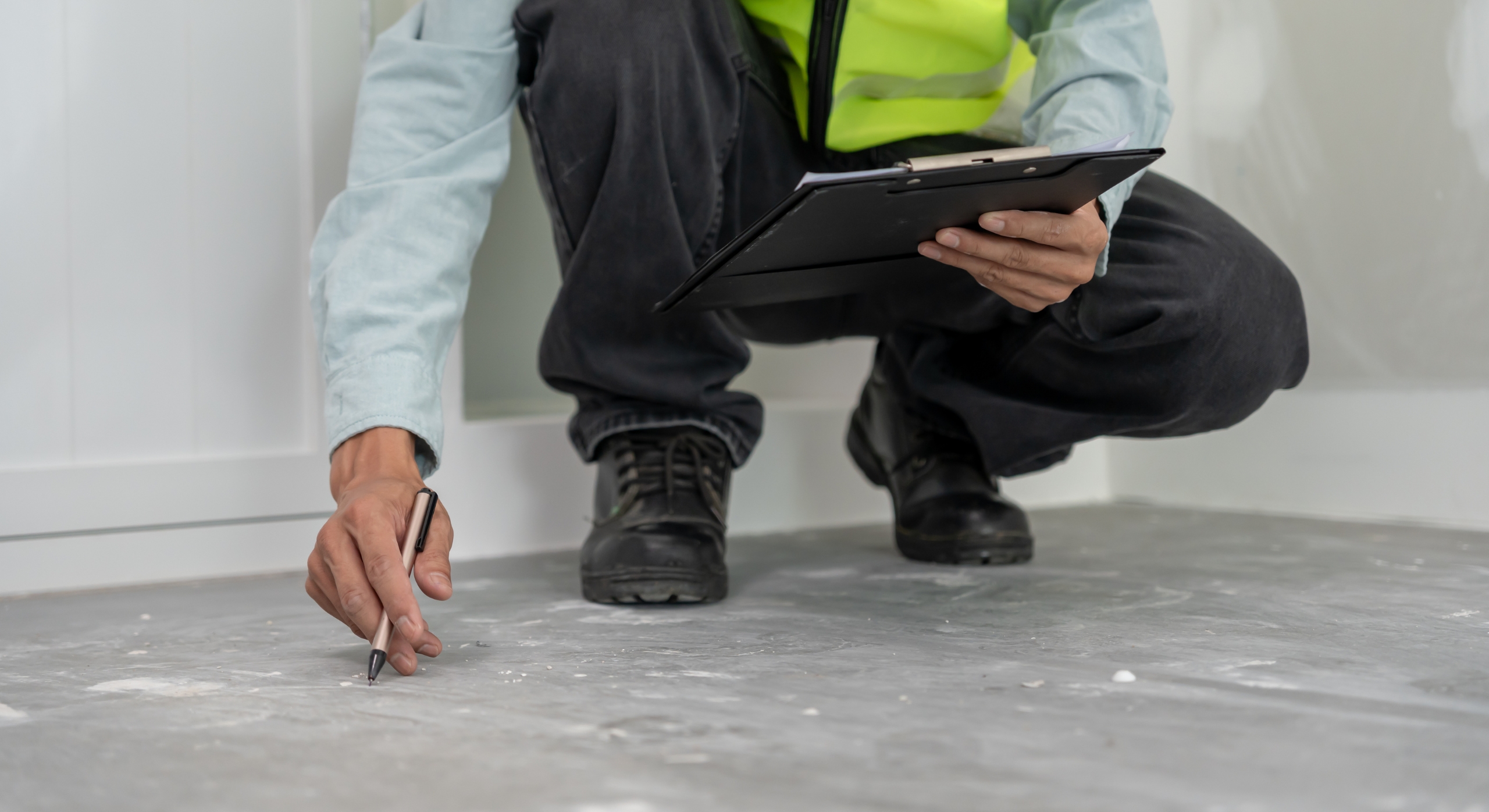
Waterproofing performance depends on both the material selected and the condition of the surface it is applied to. A membrane rated for long-term performance will not reach that rating if it is installed over a substrate that has not been checked for moisture, cracks, contamination, or correct slope. Verification at the preparation stage is what ensures the site is actually ready for the waterproofing products being specified for the project.
This checklist lists the points to verify before application, covering site inspection, surface condition, material compatibility, crack repair, slope, and material compliance. Working through it consistently gives project teams a documented way to confirm the waterproofing solutions installed on a project are set up to perform as intended for their full-service life.

Check 1: Site Inspection for Moisture Risks
A site inspection identifies moisture risks and vulnerable areas before waterproofing work begins. Moisture meters are used to check for existing dampness in the substrate, and the inspection should cover points where water tends to collect. Junctions such as parapets, drains, and pipe penetrations carry a higher risk of leakage than flat, open surfaces and need closer attention.
Each vulnerable area gets documented with photos and written notes. This record helps the team match the correct waterproofing solutions to each condition found on site, since a terrace, a basement wall, and a bathroom deck face different moisture exposure and call for different treatment.
Check 2: Surface Cleanliness and Dryness
Surfaces need to be clean, dry, and free of debris, oil, and other contaminants before waterproofing begins. What counts as clean varies by surface type and prior use. Typical preparation includes:
- Mechanical brushing or vacuuming to remove dust, sand, and loose debris
- Solvent cleaning for oil residue on parking decks, workshops, or industrial floors
- Pressure washing followed by adequate drying time on surfaces exposed to weather
- Moisture testing, confirming readings fall within the range stated on the data sheet of the waterproofing products being used
Most membrane systems have a maximum allowable moisture level for application, and skipping this check is one of the more common reasons adhesion fails on otherwise well-prepared surfaces.
Check 3: Material Compatibility Testing
The surface should be tested for compatibility with the waterproofing materials selected for the project. This usually means applying a small test patch and checking adhesion after the manufacturer’s recommended interval, before the full-scale application starts.
Compatibility testing matters most where the substrate is not plain concrete. Existing tiled surfaces, metal decking, and surfaces carrying a previous coating all behave differently under a new membrane, and selecting waterproofing products without confirming compatibility on substrates like these is a common cause of adhesion failure reported after installation.
Check 4: Crack and Joint Repair
Substrate cracks and joints need proper treatment or repair before membrane application. The repair approach depends on the type of crack:
- Static cracks: filled with repair mortar or epoxy grout, since they are not expected to move further
- Dynamic cracks: treated with a flexible sealant, since ongoing movement will reopen a rigid repair
- Construction joints: fitted with a bond breaker and backer rod before sealant application
- Expansion joints: detailed with a joint system rated for the expected range of movement
A membrane applied directly over an untreated crack tends to reflect that crack and fail at the same point once the structure moves. Repairs should cure fully, per the repair material’s data sheet, before the waterproofing system goes on over them.
Check 5: Slope and Drainage
The slope should be adequate to direct water flow away from the structure, typically a minimum gradient in the range of 1 to 2 percent toward drains on roofs, terraces, and podium decks. A flood test, where water is ponded on the surface for a set period before application, confirms whether the drainage design is actually working as intended.
Flat or poorly sloped areas allow water to sit on the surface, which raises hydrostatic pressure on the membrane and shortens its service life. Drain positions should be checked alongside slope, since a drain set higher than the surrounding surface will not clear ponding water no matter how well the waterproofing solutions perform elsewhere on the deck.
Check 6: Material Condition and Compliance
Before installation, project teams should confirm the following about the delivered material:
- Approval status against the project specification
- Compliance with the applicable building code
- Batch number and expiration date
- Storage conditions on site, since some waterproofing products lose performance if exposed to extreme heat, cold, or humidity before use
Cross-checking delivered material against the approved product data sheet confirms that the specified waterproofing solutions are actually going into the ground, rather than a substitute product swapped in somewhere during procurement.
Partner with Sunanda Global
With over 45 years of expertise, Sunanda Global leads in innovation in construction chemicals and coatings. We invest 5% of annual revenue in R&D, focusing 60% of our efforts on LEED-compliant and eco-friendly products.
As the best waterproofing company, our low-VOC, environmentally conscious water leakage solutions deliver top performance. Moreover, Sunanda Global provides full support: from technical advice to vetted partners. With us, you can expect reliable on-site execution through trusted waterproofing contractors in Ahmedabad, Chennai, Hyderabad, Mumbai, and other major cities.
Contact us for a free consultation on waterproofing solutions and ensure maximum durability for your infrastructure.
Frequently Asked Questions
Q.1. What happens if waterproofing is applied without a moisture check?
Moisture trapped under the membrane can cause blistering, adhesion loss, and premature failure of the waterproofing solutions applied over it.
Q.2. Why does slope matter for waterproofing performance?
Correct slope directs water away from the structure. Ponding water increases pressure on the membrane and shortens its service life.
Q.3. Why is material compatibility testing necessary?
It confirms the selected waterproofing products bond correctly with the substrate, which prevents adhesion failures that are difficult to diagnose after installation.
Q.4. How are dynamic cracks different from static cracks in waterproofing preparation?
Dynamic cracks continue to move after repair and need a flexible sealant. Static cracks can be filled with a rigid repair mortar or epoxy grout.