

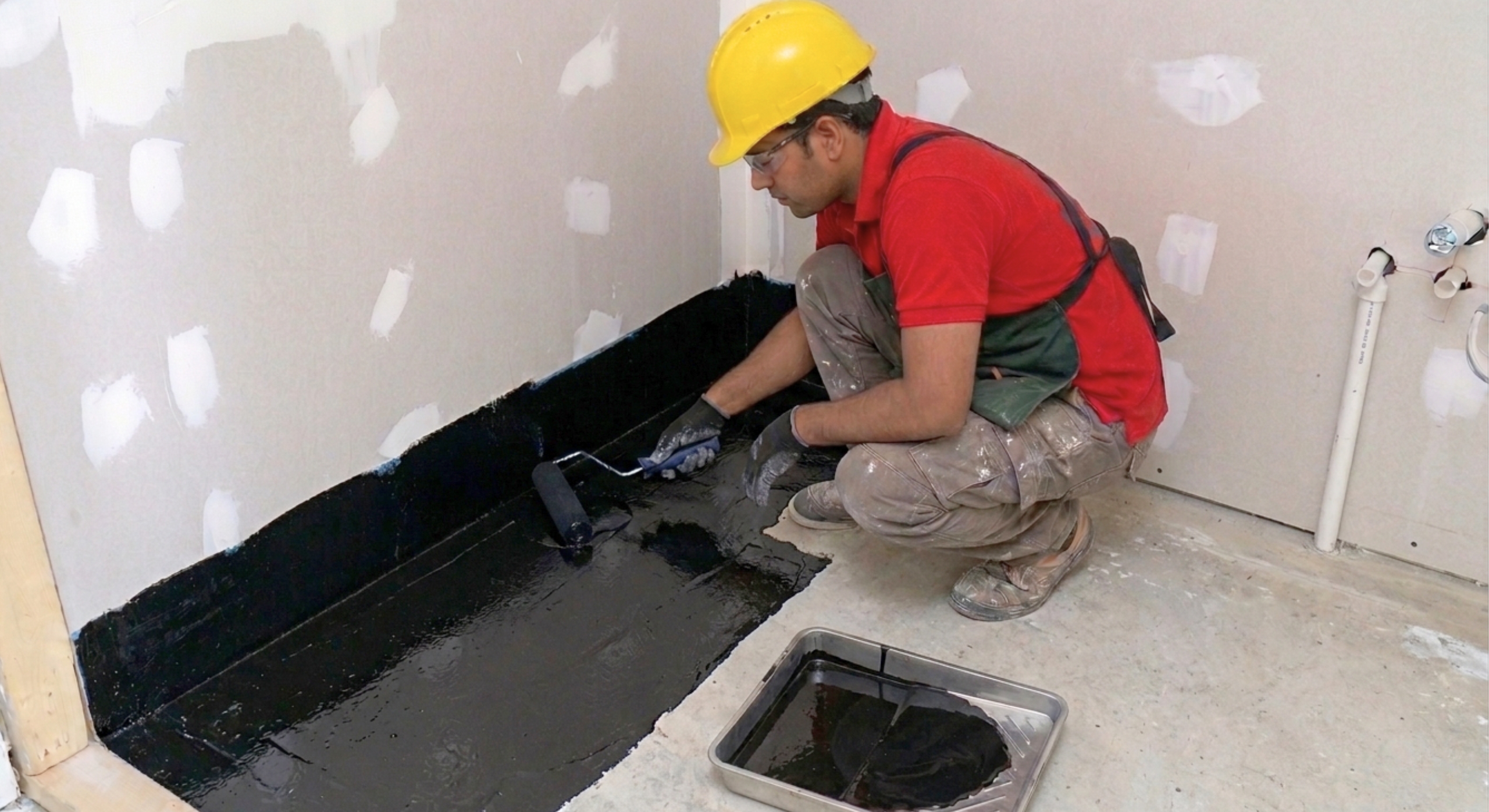
Bathrooms are among the most water-exposed areas in any building. Constant moisture, steam, temperature changes, and cleaning chemicals act on floors and walls every day. Tiles and grout alone do not provide waterproofing. Water seeps through grout lines, hairline cracks, and joints, reaching the substrate below. Structural damage, mold growth, and subfloor deterioration follow. A waterproofing membrane installed under the finish layer prevents that.

What Does a Waterproofing Membrane Do in a Bathroom?
Tiles and grout are not waterproof. Water passes through grout lines, small cracks, and surface gaps and reaches the substrate underneath. A waterproofing membrane placed between the finish layer and the substrate blocks that path. It keeps water away from concrete, preventing rot, mold, and structural deterioration. Shower areas, sunken floors, wet rooms, and surfaces around bathtubs and sinks all require this protection.
Why the Membrane Needs to Be Flexible
Concrete floors expand in heat and contract in cold. Buildings settle gradually. These shifts create stress in the substrate that rigid coatings cannot handle. Cracks form, and water finds those cracks. A flexible waterproofing membrane stretches under this movement and returns without cracking, keeping the barrier intact. It cures into a seamless, monolithic film under the tile layer, with no joints for water to exploit.
What Does a Sealing Membrane Do?
Corners, drains, pipe penetrations, floor-to-wall junctions, and shower outlets are the most leak-prone points in a bathroom. A sealing membrane, applied with tapes, collars, and pre-formed corners, reinforces these transitions and creates a continuous barrier at each of these details. Without sealing at these points, a correctly applied waterproofing membrane can still fail at edges and joints. The sealing membrane and the field membrane function as one integrated waterproofing system.
Sunanda Global’s Waterproofing Membranes
Sunanda Global offers two categories of waterproofing membranes for bathroom and wet area applications.
1. Liquid Applied Waterproofing Membranes
Liquid applied waterproofing membranes are applied like paint or spray and form highly flexible, monolithic, jointless membranes. Sunanda Global’s range includes polyurethane waterproofing membranes, polyurea membranes, and hybrid polyurea membranes, suited to bathroom floors, kitchen floors, shower pans, and other wet area applications.
2. Self-Adhesive Waterproofing Membranes
Self-adhesive waterproofing membranes are thin layers placed over a surface to prevent water from contacting the materials or structure below. They are adhesive or laid directly on top of the substrate they protect. Sunanda Global’s self-adhesive waterproofing membrane range covers basement, underground, deck, and podium waterproofing applications.
Partner with Sunanda Global
Sunanda Global has worked across construction chemicals in India for over 45 years, covering waterproofing, coatings, flooring, and concrete modification. System compatibility gets addressed at the specification stage, not during execution.
5% of annual revenue goes into R&D, with 60% of that directed at LEED-compliant and eco-friendly products. Every system is developed and supplied under ISO 9001:2015 certified processes.
As a construction chemical manufacturer in India, Sunanda Global develops waterproofing solutions that account for Indian site conditions: high moisture, temperature swings, and chemically aggressive environments.
Contact the Sunanda Global team for product selection, technical support, substrate evaluation, and application detailing.
Frequently Asked Questions
Q1. Can the same waterproofing membrane be used on both bathroom floors and walls?
Some liquid applied waterproofing membranes work on both horizontal and vertical surfaces. Application thickness and method vary between the two. The product’s technical data sheet specifies requirements for each surface type.
Q2. How soon can tiles be laid after applying a waterproofing membrane?
Product type, temperature, humidity, and applied film thickness all affect cure time. Laying tiles before the membrane fully cures risks adhesion failure. Minimum overcoating times are specified in the manufacturer’s technical data sheet.
Q3. Does a waterproofing membrane replace the need for proper drainage design?
A waterproofing membrane stops water from entering the structure. It does not manage surface water flow. Correctly sloped floors and properly positioned drains are still required alongside the membrane for the system to function correctly.